
What’s in this Article
- What a good fit actually feels like when you move
- Measure once, shop faster every time
- Recommended picks (optional)
- FAQ
- Quick scenarios and what to try
- Fast answers to common sizing questions
We have all been there. You order cute workout clothes, try them on, and something is off. The waistband digs when you squat. The bra band rides up when you jog. The shorts feel great standing still but creep the moment you move.
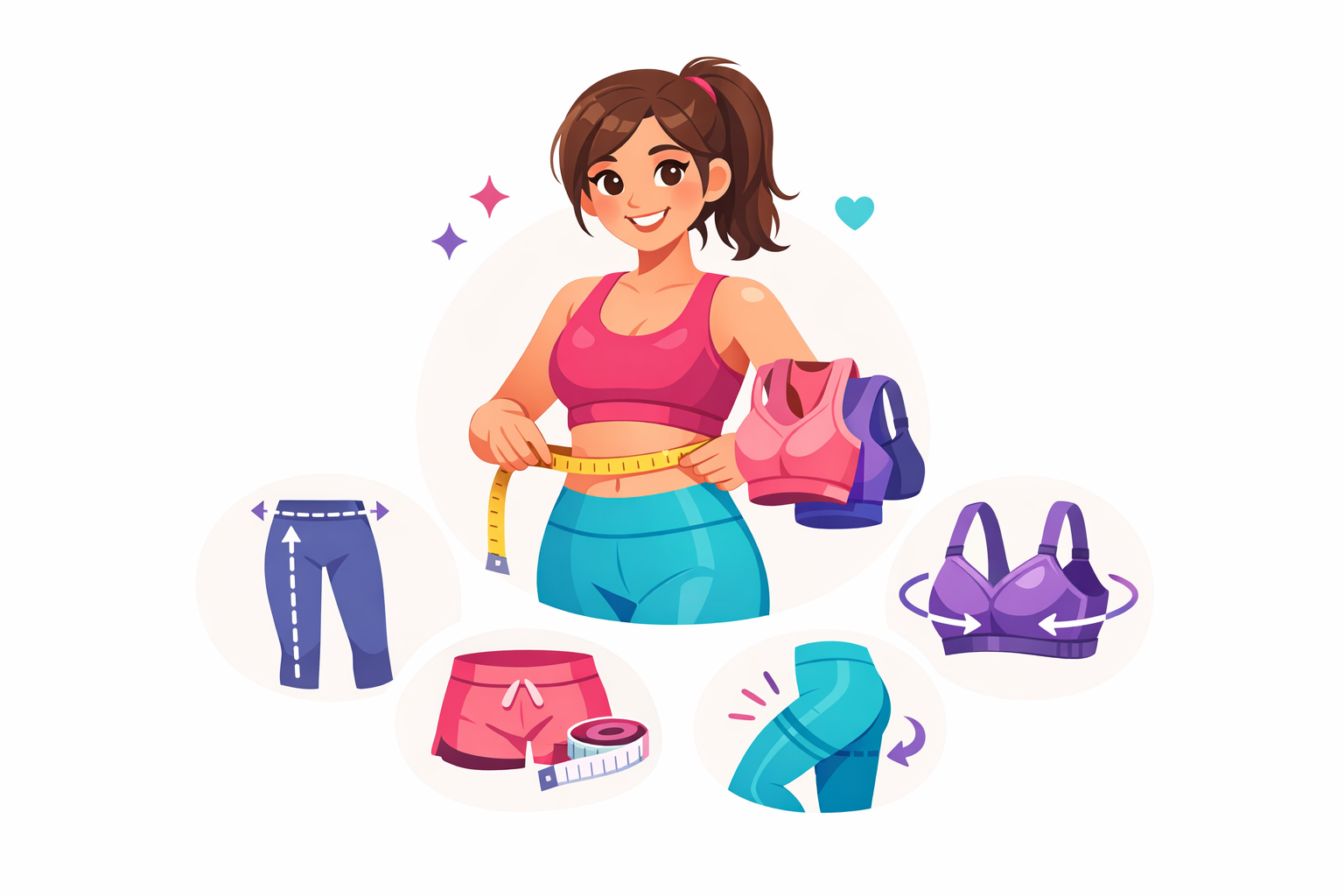
This guide is our honest shortcut to fit and sizing for women’s workout clothes. We will cover how to measure yourself once, how to read size charts without guessing, and how rise, inseam, band, cup, and compression should feel in real life.
We are not chasing a number on a tag. We are chasing comfort, support, and confidence. Expect practical checks you can do at home and clear language for what to look for when you shop.
Bodies are not standard and brands fit differently. Hormones, heat, and training cycles can also change how things feel week to week. We will show you how to build a fit baseline and how to leave room for those shifts.
Do this first: grab a soft tape measure and a notepad. Measure your underbust, full bust, natural waist, high hip, low hip, and your preferred inseam. Write them down with today’s date. This one step will save you hours later.
What a good fit actually feels like when you move
Leggings and shorts that forget to roll or slide
- Waistband: snug enough to stay put but not so tight that it pinches when you sit. You should slip two fingers inside comfortably without digging.
- Rise: mid or high is personal. The key is no gaping when you hinge and no roll when you brace. If the front dips during squats, the rise is too low for your torso length.
- Inseam: choose based on chafe points. For many of us, 5 to 7 inches in shorts prevents inner thigh rub. Full-length leggings should graze the ankle without pooling.
- Opacity: do a squat in bright light. If you can see the tag or skin tone, go up a size or choose a higher-density knit.
- Recovery: stretch the fabric at the thigh and let go. It should snap back without rippling. If it waves, the fabric may bag out during workouts.
Sports bras that keep your focus on the workout
- Band: the band does most of the support. It should sit level around your ribcage and feel firm on the loosest hook or setting. Two-finger rule again. If it rides up, the band is too big.
- Cups: no quad-boob spill and no gaping. Light wrinkling means the cup is too big. Spillage often means the cup is too small or the coverage is too low for your activity.
- Straps: adjust so they lift without digging into your shoulders. If the band is correct but you still bounce, try higher coverage or a different support level for high impact.
- Bounce test: 10 small jumps or a quick jog in place. Minimal vertical movement means you are set. Pain or constant adjusting means the fit is off.
Tops and tanks that move, not cling
- Shoulders: seams should sit at the edge of your shoulder, not pull inward or drop down your arm.
- Armholes: no chafing at the seam and no large gaping that exposes the side of your bra unless that is the style you want.
- Length: cropped, hip, or longline is personal. Check for ride-up during overhead presses. The hem should not roll up over your belly button unless designed to.
Measure once, shop faster every time
The measurement list we actually use
- Underbust: tape around your ribcage where a bra band sits. Exhale and pull the tape level and snug.
- Full bust: tape around the fullest part of your chest without flattening.
- Natural waist: the narrowest point above your belly button. Stand tall, relax your abs, and do not suck in.
- High hip: around the top of your hip bones.
- Low hip: around the fullest part of your hips and butt.
- Inseam: from inner crotch seam to the point you want your shorts or leggings to end. Measure both a bike short length and a full-length.
- Rise preference: measure from the crotch seam up to where you like the waistband to sit. This helps match mid or high rise across brands.
Tip: note each number to the nearest quarter inch or half centimeter. Add the date and any cycle or hydration notes if you are prone to bloat. It explains day-to-day differences.
How to use your numbers with size charts
- Translate sizes: if a chart lists waist and hip ranges, pick the size that fits your largest measurement for bottoms. For tops and bras, start with band from your underbust and cup from the difference between bust and underbust.
- Read fabric content: more spandex usually means more stretch and recovery. Compressive knits feel tighter. If between sizes in a highly compressive legging, some of us size up for comfort. In lower stretch fabric, sizing up can help with mobility.
- Check fit notes: look for words like compressive, medium support, light support, high coverage, squat proof, tall or petite. These clues matter as much as the numbers.
Realistic edge cases to plan for
- Brand variance: two medium leggings can fit totally differently. Use your measurements, not just your usual letter size.
- Body changes: training cycles, pregnancy, postpartum, and perimenopause can change measurements and comfort levels. Build in adjustable features or keep two sizes of key pieces.
- Torso length: a long or short rise can make a perfect legging feel wrong. If waists roll or straps dig even when the size seems right, you may need tall or petite options or different rise heights.
Do this next: put on your current best-fitting sports bra and leggings, set a two-minute timer, and do 10 squats, 10 arm raises, and 10 step-ups. Any digging, sliding, or adjusting gets a quick note in your phone. Those notes plus your measurements are your road map for every future purchase.
Recommended picks (optional)
A simple starter option
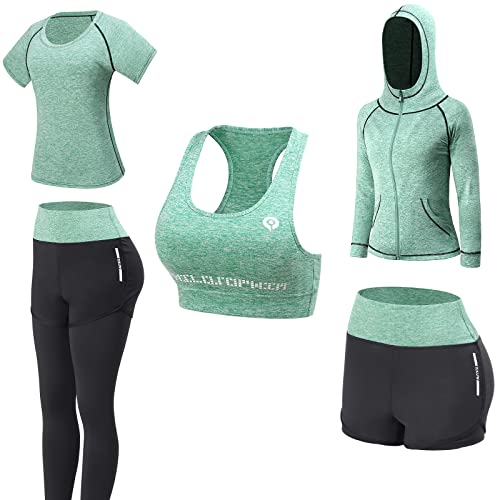
Mix-and-match set with bra, tee, shorts, leggings, and jacket—soft, stretchy, and breathable for gym to errands. Curvy? Try sizing up. Peek the size chart to find your fit.
Price and availability are accurate as of 03/21/2026 11:03 am GMT and are subject to change.
If you are brand new to activewear sizing, this is a low-stress way to find your baseline. We like it for figuring out your preferred rise, inseam, and compression without overthinking it. Use it to take notes on what feels good so you can shop faster next time.
A high-impact bra fit check option
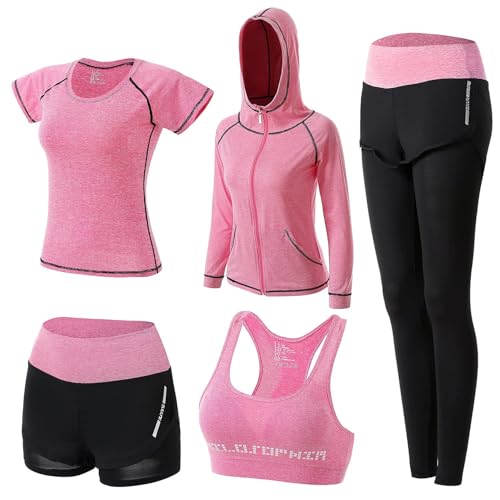
One set, five essentials—bra to jacket. Soft, breathable stretch for yoga to runs. Padded support, mix-and-match coverage. Peek the size chart and pick your fit.
$44.63 on Amazon
Price and availability are accurate as of 03/21/2026 10:57 am GMT and are subject to change.
Runners, jumpers, and class lovers can use this to dial in band-first sizing and bounce control. Do the jump test, check that the band stays level, and note any gaping or spillage so you can adjust cup and strap choices with confidence.
Leggings for everyday training
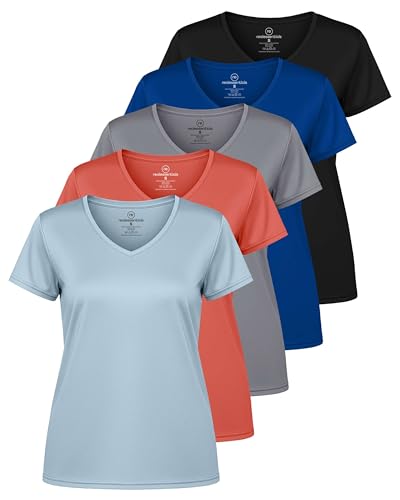
Breathable, moisture-wicking V-neck tees that move with you—from yoga to errands. Lightweight, flattering, and sun-friendly. The 5-pack makes outfit planning easy.
$34.99 on Amazon
Price and availability are accurate as of 03/21/2026 08:59 am GMT and are subject to change.
Great for testing rise, inseam, and mobility on squats and lunges. If you are between sizes, use this to compare how the waistband stays put, how the fabric stretches at the knees, and whether you prefer a closer or easier fit through the hips.
Versatile shorts for sweaty workouts
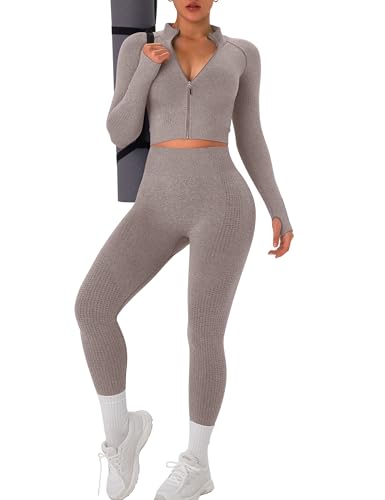
Comfy, sculpting set: self-locking zip jacket with thumb holes + high‑waist, tummy-control, butt‑lift leggings. Breathable, not see-through. Pick black, blue, or cream.
$27.99 on Amazon
Price and availability are accurate as of 03/21/2026 09:00 am GMT and are subject to change.
If you run warm or do a mix of HIIT and strength, this helps you learn your ideal leg opening and coverage. Watch for ride-up on step-ups, check inner-thigh seams for comfort, and sit to confirm the waistband still feels good.
FAQ
Sizing basics
Q: I am between sizes. Which way should we go?
A: Look at fabric and compression. High stretch or light compression, size down for hold. Low stretch or firm compression, size up for comfort. For bras, if the band is tight but cups fit, go up a band size. If cups are small, go up a cup size.
Q: How tight should compression feel?
A: Snug but breathable. You should move, squat, and raise arms without pain or shifting. No pinching, numbness, or sheerness. Deep marks or limited range means size up or choose lighter compression.
Fit troubleshooting
Q: My leggings roll down or slide. What can we try?
A: Check rise first. If your navel is uncovered, try a higher rise. Look for a wider waistband and more elastane. If hips fit but waist gaps, try curvy fits or size down in a stretchier fabric. Do a walk and squat test at home.
Buying online with confidence
Q: How can we choose inseam and rise without trying on?
A: Measure your favorite pair. For inseam, measure crotch to ankle bone for leggings or to your target thigh point for shorts. Rough guide is 5 inch mid thigh, 7 inch above knee, 9 inch biker. For rise, measure crotch to where you want the waistband to sit. Compare to garment measurements and model notes. If returns are easy, order two sizes and keep the best.
Finding the right fit is not about chasing a number on a tag. It is about clothes that move with us, keep us covered, and help us focus on the workout. When we know our measurements and how different fabrics behave, shopping gets simple and try-ons get faster.
In practice that means measuring once, reading size charts with an eye on stretch, and checking the rise, inseam, and compression that match our moves. Sports bras should hold without pinching. Bottoms should pass a squat test in good light. Tops should not ride up or cling where we do not want them to.
Here is the quick decision recap we use:
- Impact first. Low impact can be light support. High impact needs firm encapsulation and a snug band.
- Choose compression by feel and purpose. Everyday comfort is light to medium. Running or HIIT benefits from firm, breathable compression.
- Pick rise for coverage in your movements. Deep squats or cycling like a higher rise. Long torsos often prefer mid to high.
- Inseam by chafe map. Thigh rub needs longer inseams. No chafe, try shorter.
- Stretch matters. High stretch runs forgiving. Low stretch or brushed fabric may require sizing up for comfort.
Quick scenarios and what to try
Leggings roll at the waist
- Try a higher rise with a wider waistband that sits above your natural waist.
- Look for a sculpting fabric with at least medium compression. Loose waistbands roll more.
- If your torso is long, test tall versions. A regular rise can feel low and roll.
Shorts ride up on runs
- Increase inseam by 1 to 3 inches to protect inner thighs.
- Pick a smoother, higher stretch fabric so the hem releases when you stride.
- Consider a split short or built-in liner short if you love a short outer shell.
Sports bra chafes or straps dig in
- If the band rubs, try a wider band with brushed elastic or an adjustable hook back for micro fit.
- Swap skinny straps for wide or racerback straps that distribute weight.
- Encapsulation cups reduce vertical bounce for fuller busts better than simple compression.
Tops cling to sweat or lift on overhead moves
- Choose light, breathable knits with some spandex for stretch recovery.
- Look for curved hems or a bit of extra length if you do burpees or presses.
- If sweat shows, go for heathers or textured knits that disguise moisture.
Between sizes or weight fluctuates
- For bras, prioritize band stability. Use strap and back adjustments to fine tune.
- For bottoms, pick the smaller size in high stretch, the larger in low stretch or brushed fabrics.
- Consider drawcord waists and compressive liners. They flex with small changes.
Fast answers to common sizing questions
How tight should compression feel
Compression should feel secure, never numb. You should breathe easily, squat fully, and slide two fingers under bands and waistbands. If you get red marks that last or tingling, go looser or switch fabrics.
Do we size up for high impact
Not usually. High impact calls for a snug band and stable straps. If cup spillage or flattening happens, choose a bra with structured cups or a different shape, not just a bigger size.
What inseam works for short vs tall
- Petite under 5’4: leggings with 23 to 25 inch inseams often hit at the ankle. Biker shorts in the 5 to 7 inch range avoid ride up.
- Average 5’4 to 5’8: 25 to 27 inch leggings are ankle length. Shorts 6 to 8 inches cover most chafe zones.
- Tall over 5’8: 27 to 29 inch inseams reach the ankle. Shorts 8 to 10 inches give reliable coverage.
Adjust by thigh shape and personal comfort.
Will fabric relax after a few wears
Most high stretch knits relax half a size with heat and motion, then rebound after washing. If it feels borderline loose at try-on, it may feel looser later. If it feels perfect but not tight, that is a good sign.
How many sports bras should we rotate
Three is a sweet spot. One to wear, one drying, one clean. Bras last longer with a day to recover between wears.
Your 2 minute fit check
- Do three deep squats and a lunge. Waist stays put. No sheer at the seat.
- Jump in place. Bra holds you without sharp bounce or band lift.
- Reach overhead and twist. Top stays down. No gaping at the armholes.
- Jog 30 seconds. Shorts do not creep. No hot spots at seams.
- Sit and breathe. Nothing digs. Fabric still feels smooth on skin.
Edge cases and when to do something different
- If you have a small rib cage with a fuller bust, look for bras with band and cup options or adjustable hook backs. Pullover bras may never fit quite right.
- If you have sensitive skin or eczema, prioritize flat seams, brushed elastics, and tagless labels. Less compression can reduce friction.
- Postpartum or during hormone shifts, expect cup and waist changes. Adjustable features and drawcords are your friends.
We all deserve gear that lets us focus on the work, not the waistband. Start with your tape measure, pick rise and inseam based on how you move, and match compression to the day. Then use the quick checks above before you cut any tags. When it feels right, you will know within two minutes.
Leave a Comment