
If you’ve ever grabbed a random belt off the gym wall and felt it jab your ribs or ride up your waist, you’re not alone. Most belts are designed as one-size-fits-most. Our bodies are not. Shorter torsos, rib flare, hip curves, cycles, and postpartum changes all affect how a belt feels once you brace and move.
This guide is for women who lift anything from goblet squats to heavy deadlifts and want a belt that actually fits. We’ll help you learn when to wear one, what width and thickness make sense, and how to size it so you get support without bruises.
Quick Comparison
What’s in this Article
- FAQ
- Your belt decision, simplified
- Five-minute action plan before you buy
Do this first: grab a soft tape measure. Stand tall, find your belly button, then take a breath in and brace like you would for a heavy rep. Measure around that spot during the brace. That number is your lifting waist. Write it down. It matters more than your jeans size.
What matters most here is fit, comfort, and the right amount of stiffness for your sport. We looked at how belts sit on shorter torsos, whether they clear the rib cage and hips, and how easy they are to tighten between sets. We’ll call out when a 3 inch belt beats a 4 inch, who should pick 10 mm leather over nylon, and when a lever is worth it. And we’ll be honest about trade-offs. A super stiff belt can add support, but it may feel rough during Olympic lifts. Velcro is fast and comfy, but not the best for max attempts.
Quick note on edge cases. If you have a current back injury, pelvic floor symptoms, or pain that changes with bracing, check in with a qualified pro before using a belt. And if you’re brand new to lifting, you can learn to brace first, then add a belt for heavier sets or when technique holds but intensity climbs.
How to choose the right belt for your body
Measure your true lifting waist
Measure at your navel while braced, not your jeans line. Most women wear a belt a little higher than their natural waist because of hip curve. If your number sits between sizes, size down if you plan to cut, or up if you tend to train around your cycle bloat. You want a hole or two of wiggle room both ways.
Find your best width
A 4 inch belt is standard, but many women feel better in a 3 inch if they have a short torso or prominent rib flare. Test by placing your hand between ribs and hips while standing. If that space is tight, a 3 inch is less likely to dig. For deadlifts, a 3 inch often clears the bar path and lets you hinge deeper without pinching. For squats, 4 inch can feel more supportive if you have room.
Match thickness to your lifts
Leather belts are typically 10 mm or 13 mm. Ten millimeter balances support and comfort for most lifters. Thirteen millimeter is very stiff and popular for max powerlifting, but takes longer to break in and can feel bulky on smaller frames. Nylon belts are flexible, easy to tighten, and great for general training or Olympic lifts where you need more torso movement.
Pick a closure that fits your routine
- Lever: fast on and off, rock solid for heavy singles, but less adjustable on the fly. Good if your waist stays consistent.
- Single prong: classic, durable, micro-adjustable hole by hole. Slower to put on when you’re breathing hard.
- Velcro: quick and comfy, easy to cinch tighter for heavy sets and loosen for accessories. Not ideal for repeated max attempts.
How we picked our favorites
Fit and sizing checks
We prioritized belts with clear size charts, inclusive ranges, and hole spacing that allows fine tuning. We looked for options that work on short and long torsos and won’t crash into ribs or hips during a brace.
Build quality and materials
Stitching, edge finishing, and buckle or lever reliability matter. We looked for leather that breaks in without cracking, nylon that holds shape, and closures that stay put under load.
Real-world comfort and support
We paid attention to how the belt feels during squats, deadlifts, and Olympic lifts. We noted hot spots, pinch points, and whether you can breathe and brace well. We also considered how easy it is to adjust between sets when your core temp and waist change.
Stability vs mobility trade-offs
Powerlifters often want max stiffness. General lifters and CrossFit athletes usually need a bit more give. We’ll point out where each belt lands so you can pick for your sport and body, not just a label.
Everyday usability
We tested how fast each belt is to get on and off, how it sits with leggings and shorts, and whether it plays nice with a sports bra band and rib flare. Because if it digs, you won’t wear it, and then it’s not helping you lift at all.
1. RDX IPF-Compliant 4″ Leather Powerlifting Belt (10mm or 13mm) – USAPL/USPA/IPL Approved
Best for Powerlifting

Chasing PRs? IPF-compliant 4-inch belt with 10mm or 13mm support, a no-slip dual-prong buckle, and durable layered leather. Pick your thickness and lift with confidence.
$44.99 on Amazon
Price and availability are accurate as of 03/12/2026 01:50 am GMT and are subject to change.
This is a strong pick for women who love heavy barbell work and want a meet-legal belt that can grow with their numbers. If you squat and deadlift with powerlifting mechanics and care about federation rules, the approvals matter. The 10mm works well for most lifters who want firm support without feeling like a brick. The 13mm is for max stability when you’re chasing big PRs and willing to deal with more rigidity.
We picked it because it keeps the essentials tight and simple: a true 4-inch profile all around, a grippy dual-prong buckle that doesn’t creep, and dense leather that locks in your brace. That combo gives reliable pressure against your core, especially at the bottom of a heavy squat.
Trade-offs: it is stiff at first. Plan a few sessions to break it in. The 4-inch height can run into ribs or hips if you have a shorter torso or more rib flare. Also, a prong is slower between sets compared to a lever. If you bounce between movements a lot, this might feel clunky.
Fit tip: measure around your waist where the belt sits, not your jean size. Most women sit slightly above the navel for squats and a touch higher for deadlifts to avoid hip pinch. Start with the 10mm if you’re new to leather belts. If you already love max-tight bracing and compete, the 13mm is worth it. You can check current sizing and details here RDX IPF-Compliant 4″ Leather Powerlifting Belt (10mm or 13mm) – USAPL/USPA/IPL Approved.
2. Body Reapers 10mm Calfskin Weightlifting Belt, 4-inch Wide for Back Support
Best Lever Belt

Solid 10mm leather lifting belt with a quick lever buckle—stable spine, stronger lifts, and USPA/IPL-ready. Check the size guide to get a snug, confidence-boosting fit.
$64.99 on Amazon
Price and availability are accurate as of 03/12/2026 01:50 am GMT and are subject to change.
If you love the feel of a true power belt and want consistent tightness for heavy barbell work, this 10mm lever belt is your lane. It suits women who are pushing progressive strength, considering a meet, or just want a stable platform for big squats and pulls.
We picked it because 10mm leather is a sweet spot. It is stiff enough to brace against without feeling like a brick wall, and the lever buckle lets you lock in the same fit every time. It is also competition ready for USPA and IPL, so you can train and step on the platform with the same belt.
Trade-offs: the full 4-inch height can ride into ribs or hips on shorter torsos. The lever is amazing once set, but you do need a screwdriver to move it if your waist changes week to week or across your cycle. It is also not the belt for metcon-style sessions with lots of movement between lifts.
Fit tip: measure your waist at your belly button while relaxed, then check the size guide on the Body Reapers 10mm Calfskin Weightlifting Belt, 4-inch Wide for Back Support page. Set the lever so you can take a deep belly breath, brace 360 degrees, and still slide a couple fingers under the belt. For deadlifts, try wearing it a touch higher to clear your hips. Keep a coin or flathead in your gym bag for quick lever tweaks as needed.
3. RAD 10mm Leather Lever Powerlifting Belt, 4-Inch Wide (63–107 cm)
Best Value Lever

Boost your squats with a 10mm, 4″ leather lever belt: solid core support, fast set-to-set tweaks, sizes S-XL, and standout colors. Curious?
$54.90 on Amazon
Price and availability are accurate as of 03/12/2026 01:51 am GMT and are subject to change.
Who it’s for: lifters who love heavy squats and deadlifts, want consistent bracing, and like the speed and confidence of a lever. If you’re training more powerlifting style or you just want something that locks in the same every time, this checks the box.
Why we picked it: the 10mm thickness is the sweet spot for many women. You get a firm, supportive feel without the brick-wall stiffness of thicker belts. The lever closure makes set to set adjustments fast, and the 4 inch height gives broad contact around your midline for steady trunk pressure. Sizes S to XL cover 63 to 107 cm, and the color options are fun if you’re over plain black.
Trade-offs: a 4 inch belt can nudge ribs or hips on short torsos, especially in the deadlift start. The lever is amazing once set, but it does need a screwdriver to move the plate if you share the belt or your body size changes. If you do a lot of Olympic lifting or circuits with burpees and bike sprints mixed in, the stiffness can feel clunky.
Fit tip: measure around your belly button, not your jeans line, and aim to be in the middle of the hole range so you can tighten for squats and keep it a touch looser for pulls. Double check the size chart on the product page before you order RAD 10mm Leather Lever Powerlifting Belt, 4-Inch Wide (63–107 cm). If you’re under 5’3″ or have noticeable rib flare, consider trying a 3 inch belt for deadlifts while keeping this one for squats.
4. MANUEKLEAR 10mm Powerlifting Lever Belt, 4-inch Wide (Green, M 29–35 in)
Best Lever Belt
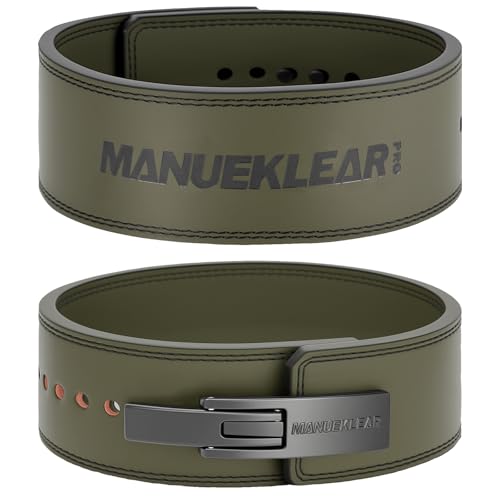
One-second lever lock adjusts on the fly and stays put. Thick 4″ non-slip leather backs your lifts with firm lumbar support for better form and confident reps.
$59.99 on Amazon
Price and availability are accurate as of 03/12/2026 01:52 am GMT and are subject to change.
If you love barbell days and want quick, consistent tightness without fiddling, this lever belt is a great match. The M 29–35 in size suits many women, and the green is a fun pop if you like a little color with your chalk. It shines for heavy squats and pulls when you want the belt to feel rock steady.
We picked it for the fast lever lock that clicks in place and stays there between sets. The thick 4-inch non-slip leather gives firm lumbar support, which can help you keep position and feel more confident under load. At 10mm, it hits that sweet spot where you get real stiffness without feeling like a brick on your torso.
Trade-offs to consider: a 4-inch belt can crowd the ribs or hips if your torso is on the shorter side. Leather also needs a couple sessions to soften up and contour to you. The M size is specific, so measure at your belly button and make sure you’re in that 29–35 in window before you add to cart. If you prefer a belt that flexes more for supersets or conditioning, a Velcro style might feel better.
Fit tip: place the belt so it clears both your ribs and hip bones, then lock it to a snug notch where you can take a deep breath and press your abs into the leather. You should be able to slip a finger or two under the edge, not more. If you want to double-check details, peek at MANUEKLEAR 10mm Powerlifting Lever Belt, 4-inch Wide (Green, M 29–35 in) for current size info.
5. Beast Power Gear Lever Weightlifting Belt, 10mm/13mm thickness, 4-inch width
Best Lever Belt

Level up big lifts with a 10mm, 4-inch suede belt and quick-lock lever that stays put. Solid core support for squats and deads. Check the size chart for your best fit.
$69.90 on Amazon
Price and availability are accurate as of 03/12/2026 01:53 am GMT and are subject to change.
If heavy barbell days are your happy place, this lever belt is a strong pick. It suits lifters who want set-and-forget tightness, especially on squats and deadlifts. The lever locks in fast, so you can focus on your setup instead of fighting with a prong.
We picked it because the combo of a suede 4-inch build and a quick-lock lever gives stable, repeatable support. You also get to choose 10mm for a little more give or 13mm if you like a tank of a belt for max attempts.
Trade-offs to know: levers are not on-the-fly adjustable. If your waist fluctuates, you will need a screwdriver to move the lever to a new hole. The 4-inch width can feel tall on shorter torsos, especially off the floor. And the 13mm version is stiff, so expect a break-in period. For Olympic lifts or conditioning, it may feel bulky.
Fit tip: measure around your waist at the height you wear a belt, usually near your belly button, not your jeans line. Double-check the size chart on the Beast Power Gear Lever Weightlifting Belt, 10mm/13mm thickness, 4-inch width before you order. Set the lever so you close the belt with a full breath and can slip in a finger or two when braced. Start with 10mm if you want easier break-in, and wear it higher for squats, slightly lower for deadlifts until it feels natural.
6. NUTUCH 10mm Leather Lever Lifting Belt for Squats & Deadlifts (Large)
Best Quick lever closure
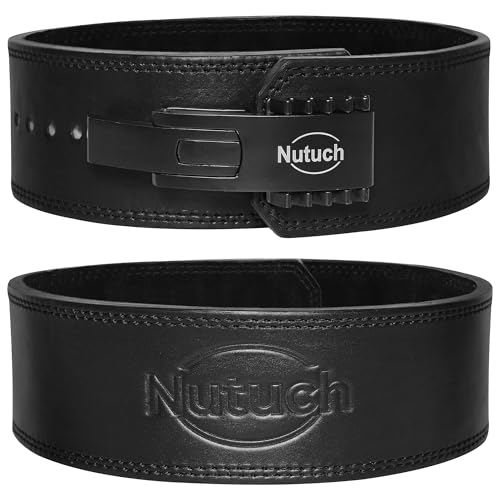
Genuine 10mm leather belt, 4″ wide, with a quick lever buckle. Braces your core and protects your back on squats and deads. Choose your size and lift confident.
$39.99 on Amazon
Price and availability are accurate as of 03/12/2026 01:53 am GMT and are subject to change.
If you love the clean click of a lever and want strong support without going ultra-stiff, this 10mm leather belt is a solid fit. It shines for heavy lower-body days, especially squats and deadlifts, and suits women who like a standard 4 inch height and a quick, repeatable setup.
We picked it because 10mm is that sweet spot: supportive enough to brace hard, but not so thick that it fights your setup. The lever buckle gives you the same tightness every time, which helps your brace feel predictable from warm-ups to top sets. You can check sizing details and availability on NUTUCH 10mm Leather Lever Lifting Belt for Squats & Deadlifts (Large).
Trade-offs to know: lever belts are less flexible for micro-adjustments between sets, so if your waist changes a bit with your cycle, hydration, or as you warm up, you might notice it. The 4 inch height is classic, but if you have a shorter torso or pronounced rib flare, it may feel tall on deadlifts.
Fit tip: set the lever so you can slide one finger under the belt on a normal breath, then take a big 360 breath and brace out against it. For deads, try wearing it a touch higher to clear your hips, and give it a couple sessions to break in so it molds to your midsection.
7. Rip Toned 10mm 4″ Leather Lever Belt with Bonus Lifting Straps
Best lever value

USPA-approved leather lever belt that locks in core stability for safer, heavier lifts – durable, comfy, quick on/off. Looking to smash new PRs?
$29.95 on Amazon
Price and availability are accurate as of 03/12/2026 01:54 am GMT and are subject to change.
If you love the locked-in feel of a lever belt and want something meet-ready, this one hits the sweet spot. The 10mm thickness is supportive without feeling like a brick, and the lever lets you get consistent tightness without wrestling buckles. Powerlifting style squats and pulls are where it shines. Check sizes and availability at Rip Toned 10mm 4″ Leather Lever Belt with Bonus Lifting Straps.
We picked it because it balances real support with day-to-day usability. It is USPA-approved, so you can train and compete with the same belt. The fast on and off is great when you move from warm-ups to working sets. The bonus lifting straps are a nice value add if you are building your kit.
Trade-offs to know: lever belts are set to one hole range, so if your waist fluctuates across your cycle, after big meals, or with different layers, you may need a quick tool to adjust the lever before you lift. The 4 inch height can poke ribs or hips on shorter torsos during deadlifts. If you often feel pinched, try wearing it slightly higher for squats and a touch lower for pulls.
Fit tip: set the belt so you can slide one finger under when you brace hard. Do a breath test before your heaviest set. Inhale, expand 360 around the belt, and check for even pressure through your front, sides, and back. Break it in with a few lighter sessions and store it flat to keep the shape.
8. Genuine Leather 10mm Lever Weightlifting Belt – 4″ Back Support (Black, XL 44-49″)
Best Quick-release lever

Want steadier squats and deads? A 10mm, 4-inch lever belt hugs your core with durable genuine leather and quick release. Measure at your navel—if between, size up.
$33.99 on Amazon
Price and availability are accurate as of 03/12/2026 01:54 am GMT and are subject to change.
If you love the feel of a true lever belt and your navel measurement falls in the 44-49 inch range, this one is a steady, confidence-boosting pick for heavy squats and deadlifts. The XL size also gives a bit of breathing room if you wear it over a hoodie in winter or prefer a lower belt position over the hips.
We picked it for the sweet-spot build: 10mm leather brings real support without feeling like a brick, and the 4-inch width creates an even surface to brace into. The lever makes tightening consistent every single set and pops open fast between efforts, which is great when you want to breathe again after a heavy triple.
Trade-offs to know: lever belts are not super adjustable on the fly, so they are less ideal for circuits or lots of movement work. The 4-inch height can feel tall on shorter torsos or if your ribs are sensitive. And like any leather belt, there is a break-in period.
Fit tip: measure at your navel, relaxed, not your jeans size. If you land between, size up. Set the lever so you can slide one finger under the belt when braced, then try a few warm-up sets and fine-tune from there. You can check current availability and details here Genuine Leather 10mm Lever Weightlifting Belt – 4″ Back Support (Black, XL 44-49″).
9. 9mm Leather Lever Powerlifting Belt for Squats & Deadlifts (Small 26–32 in)
Best small lever belt

Instant lever lock tightens in a snap; 10mm leather and 4″ back support brace your core for heavy squats and deads. Quick, snug adjustments—worth a closer look.
$35.99 on Amazon
Price and availability are accurate as of 03/12/2026 01:55 am GMT and are subject to change.
If you lift heavy and want a quick, consistent lock-in, this lever belt is a strong fit for smaller waists. The small size range targets 26–32 inches, which helps shorter or more petite lifters get the right hole placement without a ton of extra strap flapping around. Great for powerlifting-style training days when you want repeatable tightness for squats and deadlifts.
We picked it for the instant lever snap and supportive 4 inch back. Leather keeps its shape when you brace, so your core gets that firm wall to push against. It shines on heavy top sets where you do not want to fuss with micro-adjustments under pressure. If you prefer a locked-in feel over flexible comfort, this is your lane.
Trade-offs: a lever is not ideal if you share your belt or change layers a lot. You need a screwdriver to move the lever between holes. The 4 inch height can crowd space if you have a short torso or feel pinching at the ribs or hip bones on pulls. It softens with use, but the first few sessions can feel stiff.
Fit tip: measure around your belly button while relaxed and try to land in the middle of the 26–32 in range. For squats, set the lever a touch tighter than for deadlifts. If the top edge bites your ribs, slide the belt a finger-width lower, or wear it over a thicker tee. You can check current sizing and availability here 9mm Leather Lever Powerlifting Belt for Squats & Deadlifts (Small 26–32 in).
10. Akatsuki 10mm Leather Lever Lifting Belt for Powerlifting (Large)
Best Fast locking support

Crave steady PRs? This 10mm suede leather lever belt locks in fast for rock-solid core and back support on squats and deads. 4in wide, non-slip, built to last. Measure waist.
$99.99 on Amazon
Price and availability are accurate as of 03/12/2026 01:55 am GMT and are subject to change.
If you train powerlifting style and love the ritual of cranking a belt tight before heavy squats or pulls, this 10mm lever belt hits the sweet spot. It’s supportive without feeling like a plank, and the lever gives you the same tightness every set without wrestling with a prong.
We picked it for women who want a consistent brace and quick on-off between working sets. The 10mm thickness is a nice balance for most of us: sturdy enough to push against, but easier to break in than thicker options. The suede finish has a grippy, non-slip feel, and the standard 4 inch width gives full trunk contact on big lifts.
Trade-offs to know: lever belts shine for heavy singles and triples, but they’re not as convenient if your waist fluctuates a lot during your cycle or you share a belt. Repositioning the lever takes a minute and a small tool. Also, if you have a shorter torso or sensitive ribs, a full 4 inch width can pinch on deep squats.
Fit tip: measure your waist at your belly button, not your jeans line, and aim for a hole range that lets you go one tighter on peak day and one looser on volume work. First session, bring a coin or flathead to dial in the lever position. You can double-check fit and availability here Akatsuki 10mm Leather Lever Lifting Belt for Powerlifting (Large).
11. BraceUP 4-inch Weightlifting Belt (L) – Back Support for Powerlifting and Gym Training
Best Comfy Velcro Pick
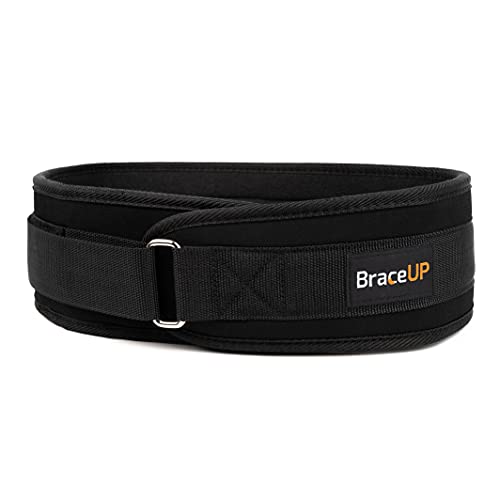
Lift with confidence: a slim 4-inch belt with memory-foam comfort, sweat-wicking velvet lining, and grippy Velcro—sturdy support for squats and deads. See more.
$19.99 on Amazon
Price and availability are accurate as of 03/12/2026 01:56 am GMT and are subject to change.
Best for beginners to intermediate lifters who want comfort first and quick adjustability. If you like the idea of a supportive belt that does not feel like a stiff board, this one lands in that sweet spot. The memory-foam and soft lining are especially nice if your ribs get tender or you are easing back into lifting.
We picked it because the slim 4-inch profile and grippy Velcro make it easy to dial in tightness between sets. The sweat-wicking velvet lining keeps the belt from feeling gross mid-workout, and the overall build gives sturdy support for squats and deadlifts without the bite of stiff leather.
Trade-offs: a Velcro belt will not feel as locked-in as a rigid leather option for max attempts, and it may not pass strict powerlifting federation rules. If your torso is very short, a 4-inch belt can crowd your ribs. If you live in heavy singles, a stiffer leather belt might suit you better.
Fit tip: measure around your waist at your belly button over a light shirt, not your jeans waist. If you are close to the edge of the Large range, double-check the sizing details on BraceUP 4-inch Weightlifting Belt (L) – Back Support for Powerlifting and Gym Training. Keep the hook-and-loop clean from lint to maintain that strong grip, and wear it just tight enough that you can take a breath and brace into it.
12. Hawk Sports 10mm Leather Lever Weightlifting Belt (4-inch), Small, Black
Best value lever belt

4-inch, 10mm lever belt for quick adjust and solid core support. Comfy leather, rounded edges; double-stitched for heavy lifts. Sleek solids, sizes S–L. See size chart.
$29.99 on Amazon
Price and availability are accurate as of 03/12/2026 01:56 am GMT and are subject to change.
If you want lever convenience without a harsh break-in, this 10mm leather belt hits a sweet spot. It is a true 4-inch lever belt, so it gives strong abdominal wall feedback for squats and pulls, but the rounded edges help it sit better on curvier hips and under the rib cage.
We picked it for lifters who train heavy but still want some comfort. The leather is supportive yet more forgiving than ultra-stiff 13mm options, and the lever makes set-up fast when you are cycling through warm-ups to top sets. Double-stitching adds peace of mind on big days.
Trade-offs to know: a 4-inch belt can feel tall if you have a shorter torso or sensitive ribs. And like all lever belts, you set the lever to one hole spacing. If your body changes through your cycle or you share the belt, you will need a quick re-adjust with a coin. Sizing runs S to L, so measure carefully and check the chart before you click buy Hawk Sports 10mm Leather Lever Weightlifting Belt (4-inch), Small, Black.
Fit tip: wear it across the soft spot between ribs and hip bones, then do the breathing test. Take a breath, brace 360, and the belt should give you something firm to push into without pinching. If it rides up on deadlifts, try a hair lower and slightly looser for that lift.
FAQ
Using your belt
- Can beginners use a lifting belt?
Yes. Start with good technique first, then use a belt on heavy compound lifts like squats, deadlifts, and Olympic variations. A simple rule: put it on when sets feel hard to brace for, usually around 75 to 85 percent effort or last working sets. It should help you create pressure, not replace core control.
- How tight should it be?
Tight enough that you can take a belly breath into it and feel 360-degree pressure, but not so tight you get dizzy or ribs feel pinched. You should fit one to two fingers inside at rest. With Velcro, aim for at least 3 inches of overlap. With prong or lever, you want room to move one hole tighter or looser across your training week.
Fit and sizing
- Do I measure waist or hips for a lifting belt?
Measure where the belt will sit when you lift, often around the belly button or slightly above for squats and a touch higher for deadlifts. Use a soft tape over a thin shirt, breathe out gently, then record. Take a second measurement later in the day if your size fluctuates and pick the middle. Skip pant sizes and go by the brand’s chart.
Care and maintenance
- How do I break in and care for a new belt?
For leather, roll it gently both ways and wear it for short sessions to soften. Keep it dry, wipe sweat off, and use a tiny bit of leather conditioner only if it feels dry. For nylon, brush lint from Velcro and air-dry after sweaty days. Check prongs, screws, and levers monthly so nothing loosens mid-lift.
If you take one thing from this guide, let it be this: the best belt is the one that fits your body and your lifts, not the one your gym crush wears. Get the size right, pick a width that clears your ribs and hips, and choose a closure that matches how you train. Comfort helps you practice bracing more often. That is where the strength shows up.
Most women end up happiest with either a 3 or 4 inch belt, 10 mm leather for heavy barbell work or a sturdy nylon with velcro for mixed training and Olympic lifts. Start simple, then get more specialized if your goals demand it. Think tool box, not trophy case.
Your next step today can be tiny. Grab a measuring tape, find your lifting waist, and write down the number. If a belt shows up and you can do three clean belly-breaths against it without pinching ribs or hips, you nailed it.
Your belt decision, simplified
General strength and beginner-friendly choice
- Pick a quality nylon belt with a solid velcro or auto-lock closure if you do a little of everything or you are new to bracing. It tightens fast, adjusts between sets, and is comfy on shorter torsos.
- If you prefer leather, try a 4 inch wide, 8 to 10 mm single prong with a slight taper. It supports squats and deadlifts without feeling like armor.
- Edge case: if your ribs sit close to your hips or you have a short torso, consider a 3 inch belt. Less digging, more bracing.
Powerlifting focus
- Go 10 mm leather if you want a balance of support and break-in time. Choose 13 mm only if you already love very stiff belts and lift heavy singles often.
- Closure is preference. Lever is quick and repeatable for heavy sets. Single prong is more flexible for small tightness changes.
- Width: most will do best with a true 4 inch. If you pull conventional and feel pinching at the bottom, a 3 inch can be a game changer.
- Caveat: if you have a history of hernia or unmanaged blood pressure, ease in and talk with a clinician before cranking tightness for max attempts.
Olympic lifting and class workouts
- Choose a nylon belt with velcro or a hybrid taper. You get support without blocking your hinge or deep front rack.
- You should be able to breathe and move through clean and snatch positions without the belt popping open or catching your ribs.
- Keep it snug for heavy complexes, then loosen fast for conditioning pieces.
Five-minute action plan before you buy
Measure once, brace twice
- Find your lifting waist. Stand tall, place the tape at your belly button or slightly above, where you naturally brace. Do not use your jeans size.
- Exhale gently, then take a small belly-breath. Note the number where the tape sits snug but not tight.
- Check the brand’s size chart. You want your number to land in the middle of a size range, not at the last hole.
- If you are between sizes, go up for nylon and down for leather most of the time. Leather stretches a touch as it breaks in.
- If you are postpartum or your cycle leaves you bloated some weeks, favor the size that gives you more hole range.
Quick fit checks when it arrives
- Position: top edge should not jam your ribs and bottom edge should not sit on your hips when you hit depth or pull from the floor.
- Tightness: you should slide two fingers under the belt, then push your breath 360 degrees into it. No sharp pain. No numbness.
- Range: you should have at least two tighter holes left for PR day and two looser holes for volume sets or bloated days.
- Movement test: bodyweight squat, hinge, and a tall plank. If you cannot move or breathe normally, adjust position or try a different width.
Care and break-in that actually works
- Leather: wear it for warm-ups and early work sets for the first two weeks. Gently roll the belt by hand after sessions. Wipe sweat with a dry cloth.
- Nylon: close velcro before tossing in your gym bag. Air-dry after sweaty sessions. Keep lint out of the hook-and-loop to maintain grip.
- Storage: hang or lay flat. Avoid heat and a wet car trunk.
- Routine: belt up for the top third of your working sets, not every rep. Build your own core and bracing on lighter work.
Need more support? Try these next
- Want stronger bracing and safer heavy days: read our simple breathing and bracing walkthrough.
- New to squats and deadlifts: check our form guides with common fixes that matter for women’s bodies.
- Building your backside for better pulls: grab our glute training playbook with hip hinge progressions.
- Outfitting your bag: see our beginner gym starter list and our favorite leggings that do not slide when you brace.
- Gear deep dive: browse our women’s strength gear hub if you want wrist wraps, straps, and knee sleeves that actually fit.
You do not need to get this perfect today. Pick the belt that matches how you train most weeks, not the fantasy version of your life. Measure, choose a width that clears your ribs and hips, and start practicing two or three braced sets per workout. Small, steady steps add up. Your future heavy self will thank you.
Leave a Comment