
What’s in this Article
- What a plus-size gym capsule really does for you
- How to choose each piece with confidence
- FAQ
- Care that keeps pieces fresh longer
- Quick answers to common questions
Building a plus-size gym capsule is about fewer pieces that work harder. If you are a beginner in 1X to 4X, you want gear that stays put, fights chafe, and feels good from warmup to wash day. We are keeping it simple, mixable, and comfortable so you can get to the workout without outfit drama.
A capsule is not a full closet. It is a tight set of tops, bras, bottoms, and a layer or two that you can rotate for strength, cardio, classes, and recovery. The key is consistent fit and fabric, so every piece plays well with the others. That means true high rise that does not roll, shorts that keep thighs from rubbing, and fabrics that breathe when it is hot and insulate when it is cold.
When we choose, we look at fit accuracy and rise height, waistband construction and grip, compression level and stretch recovery, inseam and coverage for anti-chafe, seam placement and gusset shape, and fabric type and weight. We also check opacity in a squat, moisture management during intervals, and whether the garment holds shape after a few washes.
There are limits to a one-size-fits-all plan. If you have a long or short torso, a standard high rise may not hit right. If you live in high heat and humidity, brushed fabrics might feel swampy and a slick nylon blend will be better. Indoor cyclists may want fewer inner thigh seams, while trail runners may prefer longer inseams and lighter colors visible at dusk.
Do this first. Grab a soft tape and write down five numbers: waist, high hip, full hip, upper thigh, and front rise from crotch seam to natural waist. List your top three workouts and how many days you do each. Pull on your current leggings or shorts and do a squat and stride test in front of a mirror. Note any roll, dip, thigh rub, or seam bite. This gives you a starting point that is real, not guesswork.
What a plus-size gym capsule really does for you
A tight mix and match set for strength, cardio, and recovery
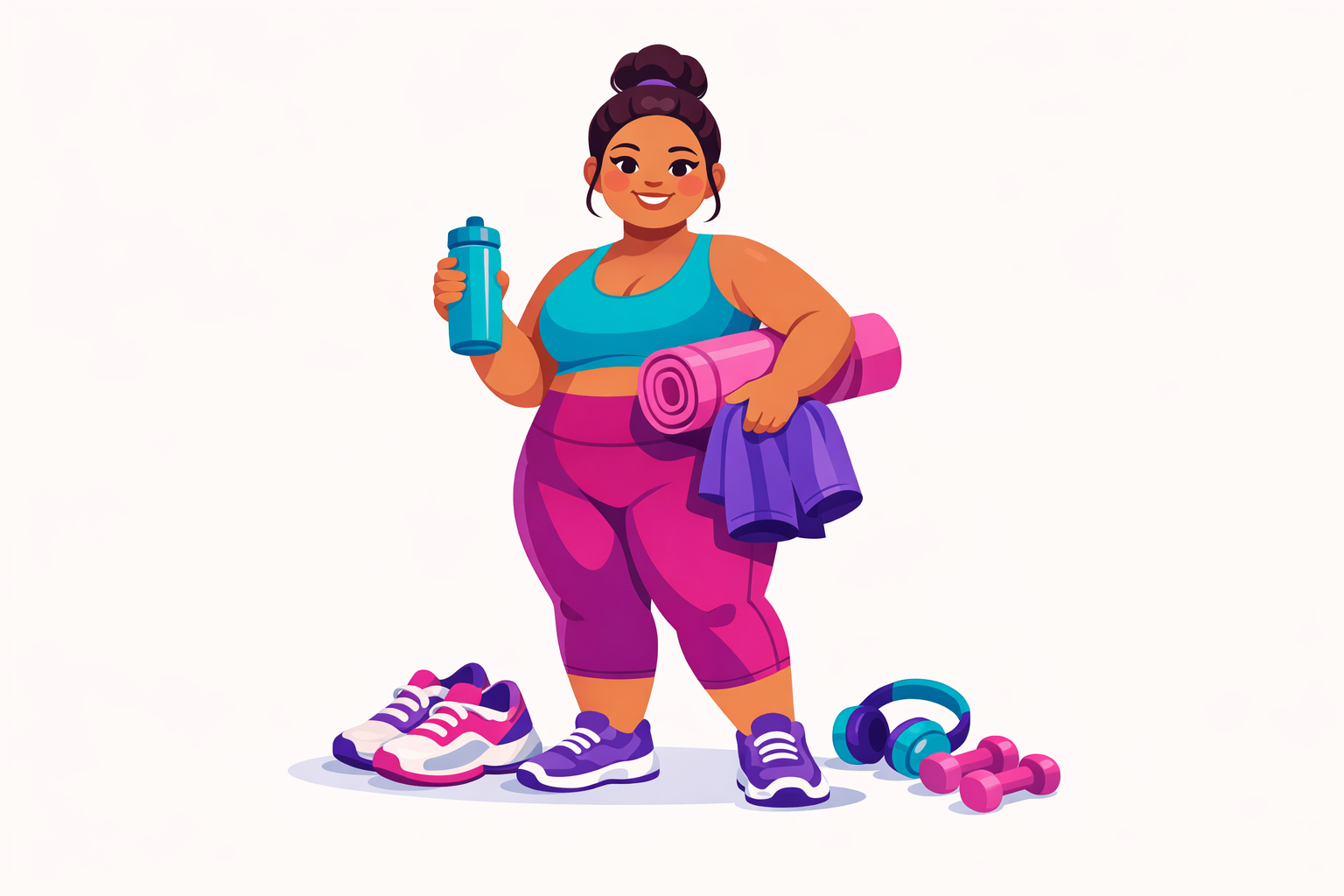
A solid capsule usually has two to three bottoms, two sports bras that match your impact needs, two to three tops, and one layer. Keep colors cohesive so everything pairs. Pick at least one bottom with a longer inseam short for hot days and one full length or 7 to 8 eighths legging for cooler gyms or barbell work. Make sure each top works with each bra, and that each bra pairs with every bottom without awkward cut lines.
Cuts decision fatigue so you show up more
When every piece fits and coordinates, dressing takes a minute. No tugging, no swapping, no mental math. That tiny win stacks. You get to class on time. You finish your run because your shorts did not ride up. Consistency loves easy routines.
Where capsules can fall short and how to fix it
A micro capsule can feel repetitive if you train across seasons. Solve that with fabric shifts, not more items. Keep silhouettes the same, but swap brushed leggings for slick nylon in summer and add a light wind layer for shoulder seasons. If your torso length makes rises tricky, choose one bottom with a curved back waistband and one with an ultra high rise so you can alternate based on the workout.
How to choose each piece with confidence
Start with your real workouts and your climate
- Strength days: prioritize opaque, medium to firm compression leggings with a curved back rise. You want stay-put support for hinges and squats.
- Cardio and classes: reach for slick nylon or polyester blends that wick fast and dry quickly. Consider a short with a 7 to 9 inch inseam if you get inner thigh rub.
- Outdoor sessions: add a light layer that blocks wind and packs small. In heat, lighter colors and lighter weights help. In cold, keep a base that fits close but still moves.
Fit and fabric fundamentals for 1X to 4X
- Compare your measurements to each brand chart and use the number that matches your largest point. If hips are two sizes above waist, favor the hip size and look for a firm waistband.
- Fabrics that work hard: nylon or polyester with spandex for bounce back. For sleek, fast drying feel, pick a higher nylon content with around 10 to 20 percent spandex. For cozy studio days, a brushed knit with similar stretch feels soft but runs warmer.
- Check stretch recovery. Gently pull the fabric and see if it snaps back or stays wavy. You want snap back so the knees do not bag out.
Compression, rise, and waistbands that actually stay put
- Compression scale: light for recovery and yoga, medium for circuits and steady runs, firm for heavy lifts or when you like more hold. If you are between sizes and prefer less squeeze, size up in firm fabrics.
- True high rise means the front rise matches your body from crotch seam to natural waist. Ultra high rise adds extra height for belly coverage and deep squats. If you have a long torso, aim for ultra high or a back rise that is slightly higher than the front.
- Waistband details to look for: at least 3 inches tall, double layer knit, power mesh facing, or subtle silicone inside. A curved back seam helps prevent gaping during deadlifts.
Inseam, coverage, and anti-chafe seam work
- Shorts: 5 inch for minimal coverage, 7 to 9 inch for most thighs, 10 to 11 inch if you have high rub or do cycling. Test by taking 20 big steps and a few side lunges. If they ride up, go longer or switch to a slicker fabric.
- Leggings: full length or 7 to 8 eighths based on height and shoe choice. If hems catch at your ankle in training shoes, try a shorter cut.
- Seams and gussets: flatlock or bonded seams reduce rubbing. A diamond or triangle gusset allows a wider squat without strain. Avoid thick inner thigh seams for running or cycling if you are chafe prone.
- Opacity and squat test: bend with your back to a mirror under bright light. If you can see skin tone, reserve those for walks, not barbell day.
With a few numbers, a quick closet audit, and clear criteria, we can build a small set that feels great and works hard. The goal is comfort that does not quit so you can keep showing up.
FAQ
Fit and sizing
Q: How tight should compression leggings feel in 1X to 4X?
A: Snug and secure, not painful. We should bend and breathe easily. The waistband lies flat with no digging. If fabric turns sheer in a squat, size up. For high impact stick to true size. For all-day wear consider one size up.
Q: Which rise helps stop roll down?
A: True high rise that sits 1 to 2 inches above the navel. Choose a wide double-layer waistband with a higher back rise or curved back seam. If it still slips, try ultra high rise or adjust one size up or down based on waist vs hip fit.
Comfort and anti-chafe
Q: How do we stop thigh chafe in shorts?
A: Pick a 7 to 9 inch inseam, slick nylon blend with at least 15 percent spandex, flat or bonded seams, and a gusset. Use anti-chafe balm on inner thighs and under the bust. For run days, layer bike shorts under loose shorts.
Budget and capsule planning
Q: What is the smallest gym capsule we can start with?
A: Try 2 leggings, 1 bike short, 2 sports bras split by impact, 3 sweat-wicking tops, 1 light layer, and socks that cover the ankle bones. That covers strength, cardio, and classes for a week.
If we had to boil it down, a good plus size gym capsule starts with your real life. Choose pieces for the workouts you actually do, in the climate you live in. Then lock in fit. That means compression that supports without pinching, a true high or ultra high rise that stays put, and inseams and seams that fight chafe.
From there it is mix and match. Build around a simple color palette, double down on the silhouettes you reach for, and repeat the winners. Your goal is fewer decisions and more movement. Not perfection on day one.
Decision recap in one line. If you run hot or do cardio, choose slick nylon blends with medium compression and 7 to 9 inch shorts. If you lift or want cozy, try brushed or ribbed with light to medium compression and full length or 7 inch inseams. Go ultra high rise if your leggings roll or you want more belly coverage. Size up for less squeeze, down for extra hold.
Your 15 minute action plan
- Measure waist, hip, thigh, and inseam. Save it in your notes.
- List your top three workouts and where you do them. Indoor, outdoor, commute.
- Pick a base palette of two neutrals and one pop color.
- Choose your compression level for each activity. Light, medium, or firm.
- Set your default inseam. 5 to 7 inch for studio, 7 to 9 inch for cardio, full length for cold.
- Do a try on and move test. Squat, lunge, step, jog in place for 60 seconds.
- Make a care plan. Cold wash, air dry, rotate pieces.
Edge cases to note
- If you have sensory sensitivities, look for brushed fabrics, tagless labels, and fewer seams. Skip silicone grip bands.
- If you train in high heat or have intense thigh rub, choose slick fabrics, 7 to 9 inch shorts, and apply anti-chafe balm on long days.
Care that keeps pieces fresh longer
Wash routine that protects stretch
- Turn items inside out. Close zippers and Velcro on other garments.
- Wash cold on gentle with a mild detergent. Skip fabric softener. It breaks down stretch and traps odor.
- Use a mesh laundry bag for bras and shorts to reduce abrasion.
- Do not overload the machine. Give elastane room to rinse clean.
Drying and storage that keep shape
- Air dry flat or hang by the waistband. High heat weakens elastic.
- Avoid hanging leggings by the ankles. It can stretch them out.
- Keep gear out of direct sun for long periods to prevent fading.
- Store like with like. Fold bras and leggings so you can see them fast on busy mornings.
Freshen between workouts
- Hang sweaty gear to dry right away. Do not leave it balled up.
- Spritz with a 50-50 mix of water and white vinegar, then air dry.
- Do a short rinse after a light session and air dry if you plan to wear again tomorrow.
- Rotate pieces. Give elastane at least 24 hours to bounce back.
Quick answers to common questions
How many pieces do I actually need to start
- Two leggings or one legging and one jogger.
- One pair of 7 to 9 inch shorts if chafe is a concern. Add 5 to 7 inch if you take studio classes.
- Two sports bras with different support levels. One medium, one high.
- Three tops. A fitted tank, a breathable tee, and a light layer.
- Socks you love. Blister free beats cute when you are logging miles.
How do I stop shorts from riding up
- Aim for 7 to 9 inch inseams for most thighs. Go 9 to 11 inch for heavy friction days.
- Look for a gusset and flat seams. That reduces bunching.
- Choose slicker fabrics for cardio. Brushed knits grip to skin and can ride.
- If you are between sizes, try the smaller one in medium compression. More hold often means less creep.
- Test in motion. March high knees for 30 seconds before you commit.
I am between sizes or my weight is changing. What should I do
- Pick medium compression with a forgiving waistband. Curved back rises help if you have a fuller seat.
- Try two sizes and return the miss. Keep tags on and do a full move test at home.
- If your goal is heavy sweat cardio, lean into the snugger size. For lifting or recovery days, the roomier one may feel better.
- Consider drawcord waists for a custom fit week to week.
Do I need different fabrics for cardio vs lifting
- Cardio loves slick nylon or polyester blends that dry fast and reduce friction.
- Lifting and pilates feel great in ribbed or lightly brushed knits that are soft and matte.
- Avoid high cotton content for high sweat days. It holds moisture and can cause chafe.
How high should the rise be
- True high rise usually meets at or slightly above your belly button.
- Ultra high rise sits 1 to 2 inches above that and helps with roll down during deep squats or runs.
- If your waistband curls when you sit, try a higher rise or a wider waistband with stay put grip.
You do not need a closet full of gear to get moving. Build the small set that fits your body and your week. Take your notes, place a starter order, do a real try on, and keep only what helps you show up. Then lift, walk, stretch, repeat.
Leave a Comment