
What’s in this Article
- What squat proof really means for real workouts
- Quick checklist you can do in 60 seconds
- FAQ
- Your 60 Second Squat Test
- Save this mini checklist
We have all done that awkward mirror crouch before a workout and wondered if our leggings were about to betray us. This guide shows you how to do a real squat test at home, fast, without guesswork or a second pair of eyes.
It is for anyone trying a new pair, changing sizes, lifting heavier, or returning to movement after a break. If you teach classes or just like to train hard and not think about your clothes, this is for you too.
Success looks simple. In five minutes you will know if your leggings are safe for deep squats, hip hinges, and lunges under honest light. You will also know if the issue is the leggings, the lighting, or your underwear choice.
We focus on clear checks you can see. Coverage at your deepest hinge. Fabric shine or color shift under stretch. Underwear visibility. Seams and gusset strain. We also call out edge cases like light colors that seem sheer on camera but pass in person, and prints that hide sheerness without real opacity.
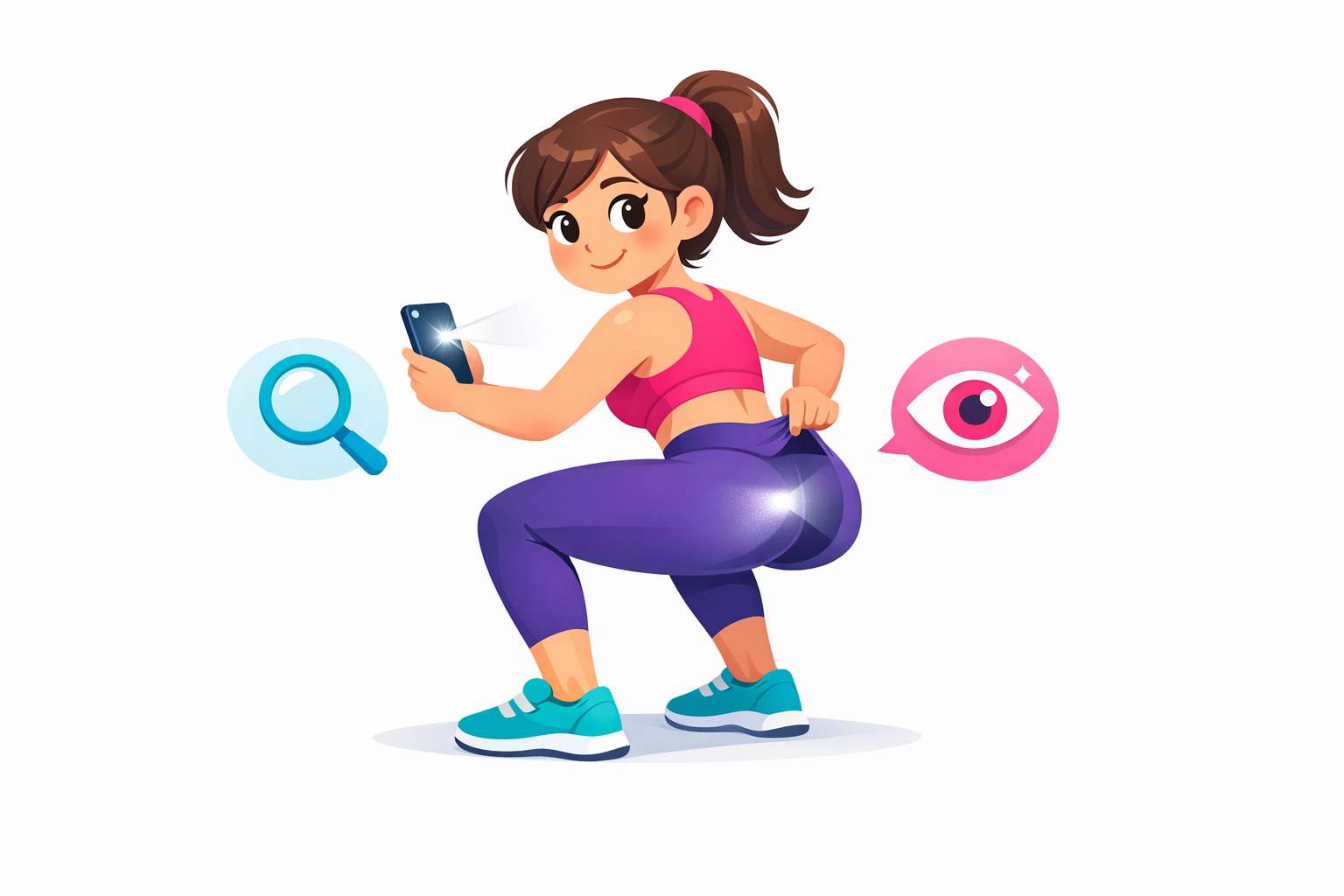
Do this first. Put on seamless underwear in a color close to your skin tone. Stand near a bright window or under a ceiling light. Set your phone on video at glute height with the rear camera, about six feet away. Now you are ready.
What squat proof really means for real workouts
Coverage at your deepest hinge, not just standing
- Stand-to-squat photos lie. You need to check coverage at your lowest point. Drop to the bottom of a squat, pause for two seconds, then hinge forward to about a flat back. That is when fabric is most stressed over the glutes and hamstrings.
- Look for three things in the video playback. Any skin tone peeking through. Your underwear outline or color. A sudden white or silvery shine where the knit opens up.
- Pay special attention to the center back seam, the curve over the glute, and the inner thigh near the gusset. These spots fail first.
Stretch versus fabric density
- Good coverage comes from a tight knit and recovery, not just thickness. Light compression often stays more opaque than loose, super stretchy fabric that thins out.
- Quick tug check. Pinch an inch of fabric at the back of the thigh and stretch it across your fingers. If you can read your nail color clearly through it, expect show-through at depth.
- Watch for color shift. Dark colors that turn gray or chalky at stretch are opening up. That is a warning sign, even if you do not see full skin.
Seams, gusset, and color contrast
- Seams tell the truth. If the center back seam looks glossy or you can see the thread lines widening at depth, the fabric is under too much tension.
- A diamond or triangle gusset helps spread stress. A tiny or absent gusset can make the crotch area sheer even when the rest looks fine.
- Underwear contrast matters. Black underwear under light leggings will fail most tests. Nude-to-you underwear reduces false fails and gives a fair read.
Quick checklist you can do in 60 seconds
15-second setup
- Put on seamless, skin-tone underwear and your leggings.
- Face away from a bright window, or stand under a strong overhead light.
- Prop your phone at glute height, six to eight feet back, rear camera on video.
30-second movement hits
- Two deep bodyweight squats. Hold the bottom for two seconds each.
- One slow hip hinge and come back up.
- One reverse lunge each side. Hold the lowest point for a beat.
15-second decision rule
- Rewatch the clips. Ask yourself:
- Do I see skin tone or my underwear color at the lowest points
- Does any area flash shiny or turn lighter under stretch
- Can I see the tag, pocket bag, or tattoo lines through the fabric
- Are seams or the gusset straining or whitening
- If you answered yes to any, they are not squat proof for you. If you only see shine in direct sun or on camera but not in regular room light, retest under the lighting you actually train in.
- Edge cases to note. Very light colors can look sheer on video even when they pass in person. Sweat can temporarily darken fabric and make it seem more transparent. If you train hot, test post warm-up too.
FAQ
Setup
Q: What lighting catches sheerness fast?
A: Stand with your back to a bright window or face a strong lamp. Add a second light slightly behind you if you can. Avoid dim rooms and harsh noon sun. Both can hide what we need to see.
Troubleshooting
Q: My leggings look fine standing but go sheer at the bottom of a squat. How deep should we go?
A: Squat to parallel. Pause two seconds at the bottom. No bouncing. Keep a neutral spine and breathe. If they only go sheer below parallel, note how you actually train. For heavy leg days that still counts.
Q: I can see a tag or underwear outline. Is that a fail or a quick fix?
A: Often a quick fix. Cut the tag. Switch to seamless, skin tone underwear or a thong. Center the gusset and smooth the fabric before you squat. If seams are turning white, try a different size or fabric blend.
Buying decisions
Q: Should we size up for more opacity?
A: Only if the waistband still stays put and the crotch does not sag. If it slips, return it. Look for a dense knit and darker colors. Matte finishes and small prints hide more than shiny fabric.
We covered a real squat test from start to finish. We set honest lighting, filmed from the right angles, wore the right underwear, and ran a quick movement sequence that actually exposes weak spots. Then we reviewed the footage and made a call without guessing.
You should feel more confident now. If a pair passes at home, it will likely hold up in class, on the platform, or during a long run. If it fails, you saved yourself a workout of tugging and worrying. That is a win too.
Remember, you are not chasing perfection. You are making a clear, practical choice for your body, your movements, and your comfort. Use the checklist below whenever you bring home a new pair or before you rip the tags.
Your 60 Second Squat Test
Set the scene
- Face bright light. No backlighting. Window by day or a lamp in front of you.
- Put your phone at hip height or on the floor angled up. Record video.
- Wear mid tone or dark seamless underwear. Solid color works best.
- Pull the leggings up and smooth the fabric. No twists or folds.
Do the moves
- Three slow air squats to parallel with a one second pause at the bottom.
- Two hip hinges to feel hamstring tension.
- Two reverse lunges each leg. Pause briefly at the bottom.
- Ten second glute bridge. Hold and breathe.
- Five small bounce squats to simulate dynamic reps.
Read the results
- Watch the video at half speed. Pause at the lowest point.
- Scan butt, upper thighs, knees, and the crotch seam. Look for skin tone, shiny grin, or color washout.
- Note waistband shift or seam strain. If seams look stretched white, that is a red flag.
- Decide: pass, pass with caveats, or fail. If it is sheer only at a depth you never reach, you may still keep them for your style of training.
Save this mini checklist
Fast decisions
- If you see skin tone or your underwear pattern at your usual squat depth, call it a fail.
- If it is only sheer in a deep pause squat but fine at parallel, keep for lifting days and skip for yoga.
- Dark solids and small prints hide grin better than pale solids. If you love light colors, test twice.
- If you are between sizes, try the larger size for less strain across the seat. If the rise then slips, that fit is not for you.
- Feeling unsure in normal room light means it will likely be worse under gym lights. Return or reserve for layering.
Edge cases to know
- Light colors can pass if the knit is dense or double layered. You will still want nude underwear that matches your skin tone.
- Curvy glutes and high hip bones may need more rise and tighter waist. Otherwise fabric migrates and thins when you bend.
- Scrunch seams and contour panels can concentrate stretch. Check those zones closely at the bottom of the squat.
Care tips that protect opacity
- Wash cold, inside out, in a mesh bag. Skip fabric softener. It can slick the fibers and reduce coverage.
- Air dry or tumble low. High heat can weaken elastane and make thin spots worse.
- Rotate your pairs. Repeated stress on the same seam day after day will show up on video.
- Sit on smooth surfaces between sets. Rough benches and Velcro can fuzz the knit and change how it covers.
You have a simple system now. Film, move, review, decide. If you want a quick memory jog, remember this order: light, angle, underwear, moves, watch, choose. Trust your footage and your comfort. The right leggings let you train hard and focus on the work, not on what might be showing.
Leave a Comment