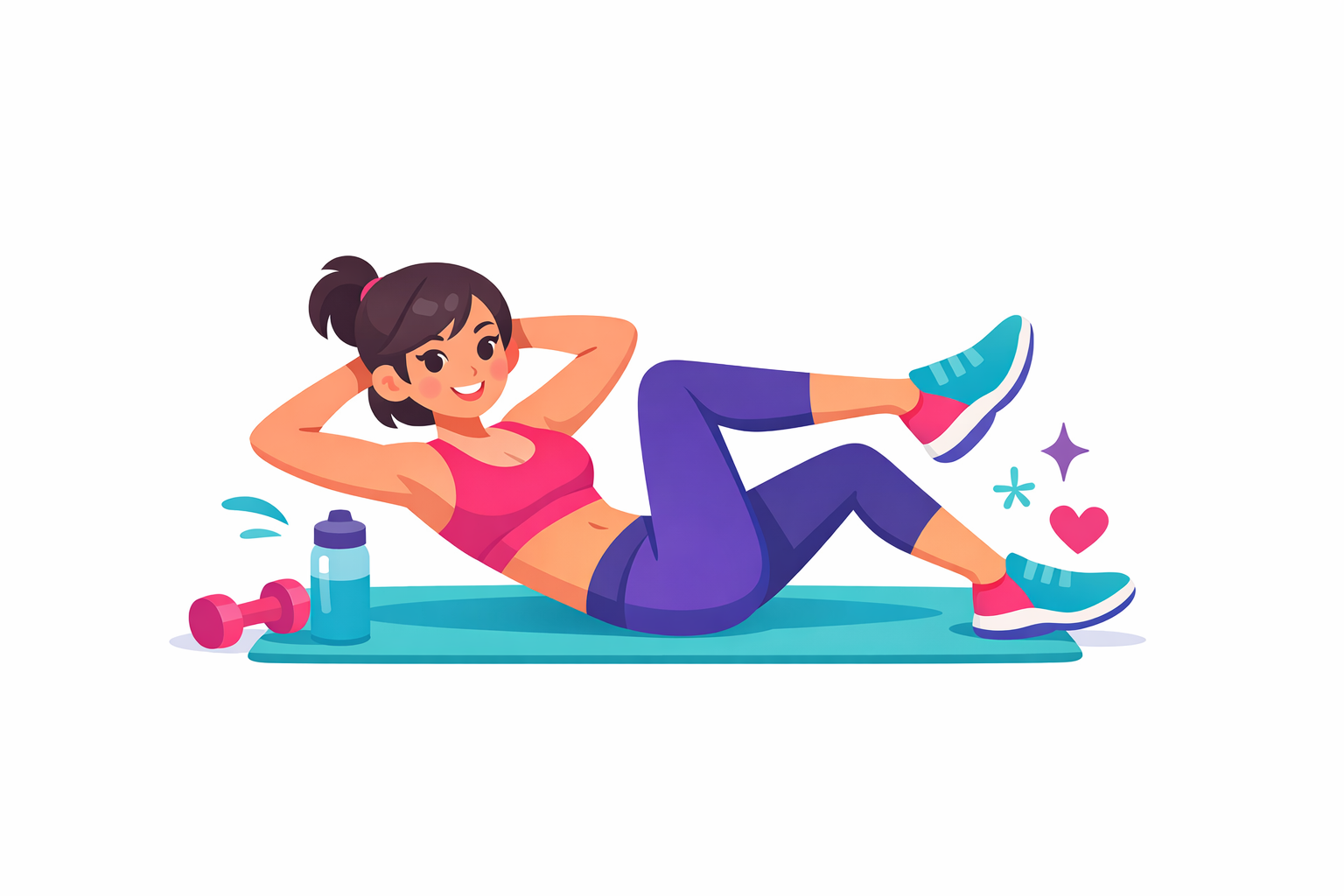

If you’ve ever saved a “flat stomach workout” while scrolling and then felt overwhelmed, you’re not alone. Real talk: there’s no single move that magically flattens your belly. What we can do is build a strong, balanced core and pair it with smart habits so your midsection looks and feels tighter over time.
This isn’t about punishment or chasing a 6-pack. It’s about strength, posture, and support for the things you actually do each day. Lifting groceries. Running after kids. Sitting through meetings without your back barking. The right core plan helps with all of it, and yes, it can help reveal more muscle tone as body fat trends down.
Quick Comparison
What’s in this Article
- How to Choose Simple Core Gear That Fits You
- How to Program Your Core Week
- Tools that make core work at home easier
- FAQ
- A Simple Action Plan You Can Start Today
- Keep It Sustainable and Supported
Here’s what to expect. Fat loss comes from a consistent calorie deficit, regular movement, and recovery. Muscle tone shows up with progressive resistance and good form. For most beginners to intermediate folks, 2 to 4 core sessions a week is plenty. Think 10 to 15 focused minutes. Quality over quantity.
We’ll walk through safe, evidence-based ab exercises you can do at home, with or without gear. I’ll give rep ranges, form cues, and tweaks for busy days. And because life is full of jobs, kids, and bad sleep, we’ll keep it real and doable. Maybe today that means five good sets. That still counts.
Do this first: lie on your back, bend your knees, take a slow inhale through your nose, then exhale like you’re fogging a mirror, ribs down, gentle brace as if zipping snug jeans. That deep core connection is your base for everything that follows.
How to Choose Simple Core Gear That Fits You
Match your space and body
- Pick sizes that fit your height and room. If you’re choosing a stability ball, check the diameter by height chart and make sure you can sit with knees at roughly 90 degrees.
- Choose tools you can store easily. Bands tuck in a drawer. A small ab wheel slides under a bed. If it’s easy to grab, you’ll use it.
Prioritize comfort and control
- Look for grippy textures and comfortable handles so you’re not fighting sweaty slip.
- Choose mats that cushion knees and spine without sinking. Firm support helps you keep neutral alignment.
- Aim for gear that lets you move smoothly in both directions. Control on the return is where a lot of core work happens.
Pick the right level and a clear progression
- Bands should have progressive resistance options. Start light, then level up when you can hit all reps with clean form.
- For ab wheels or ball roll-outs, test range first. You should stop before your low back arches. Over time, increase reach by a few inches.
- Durability matters. Seams, anchors, and straps should feel solid so you can focus on your reps, not on whether something will give.
Edge cases: if you’re pregnant, newly postpartum, or dealing with diastasis recti or hernia, choose supportive gear and skip high-pressure moves. We’ll flag modifications in the exercise list.
How to Program Your Core Week
Frequency and sets that actually work
- Beginners: 2 core days per week, 2 to 3 exercises per session, 2 sets each, 8 to 12 slow reps or 20 to 30 seconds per hold.
- Intermediate: 3 core days, 3 to 4 exercises, 3 sets, 10 to 15 reps or 30 to 45 seconds per hold.
- Pair one stability move, one anti-rotation or oblique move, and one flexion or reverse flexion move for balance.
Progression you can feel in 4 weeks
- Week 1 to 2: Nail form. Pause 1 to 2 seconds at the hardest point of each rep.
- Week 3: Add time, reps, or a small range increase. Example: plank from 20 to 30 seconds, dead bug with longer exhale.
- Week 4: Add light resistance or a tougher variation. Example: side plank from knees to feet, banded twists instead of bodyweight.
When to back off or modify
- Pain in the neck, hip flexors gripping, or low back arching are signs to regress. Shorten the range, slow down, or switch to a supported version.
- If you’re pregnant or postpartum, avoid moves that cause doming or bulging through the midline. Favor breathing-based core work and side-lying options.
- Chronic low back pain or pelvic floor symptoms call for clearance from a health pro before ramping up.
Tools that make core work at home easier

Grippy, anti-burst half-ball with detachable bands. Build core, balance, and strength anywhere—compact, quick to inflate, and ready to go. Includes pump.
$59.99 on Amazon
Price and availability are accurate as of 03/13/2026 12:39 am GMT and are subject to change.
A set of resistance bands adds gentle, scalable tension to chops, twists, and anchored dead bugs without needing bulky weights. They’re tiny-space friendly and great for travel. If you’re new, start lighter and progress weekly as reps feel smooth. Compare levels and setup ideas here: 65cm Anti-Burst Exercise Ball with Pump for Yoga, Pilates, Pregnancy, or Desk Chair.
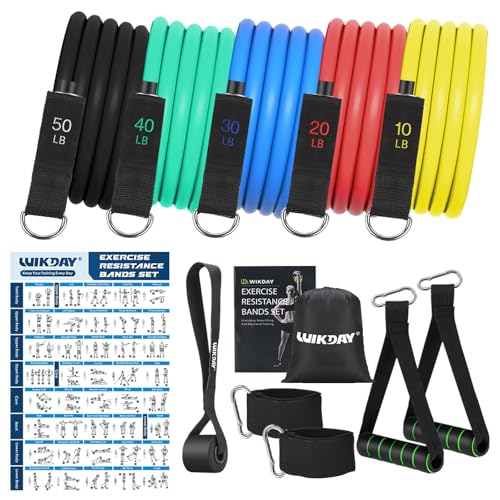
Build strength anywhere with 10–150 lb stackable bands, grippy handles, ankle straps, and a door anchor—plus a wall poster for moves. Durable latex, travel-ready.
$17.89 on Amazon
Price and availability are accurate as of 03/13/2026 12:40 am GMT and are subject to change.
If planks or hollow holds make your elbows, wrists, or tailbone cranky, a supportive exercise mat helps you stay consistent. You’ll get better grip for sweaty palms and enough cushion to keep pressure off joints. Keep it rolled by the couch for quick 10-minute core sessions. See specs and care tips here: WIKDAY Resistance Bands with Handles, 150–300 lb Set with Door Anchor.

Grab-and-go resistance bands built for daily sweat: durable, snap-resistant, and great for arms, legs, and more. Lightweight with a travel pouch—work out anywhere.
$16.99 on Amazon
Price and availability are accurate as of 03/13/2026 12:40 am GMT and are subject to change.
For roll-outs and anti-extension work, a simple core roller or stability ball lets you start small and increase range as your strength builds. Knees down, short roll first, then farther when you’re ready. It’s a powerful, low-equipment upgrade to planks. Check setup variations here: 12-Piece Resistance Bands Set with Handles, Door Anchor & Ankle Straps for Home Workouts.
FAQ
Getting Started
- Will ab exercises burn belly fat?
Not by themselves. We can’t spot-reduce. A small calorie deficit, regular movement, enough protein, and sleep help reduce body fat. Core work builds strength and posture so your midsection looks and feels firmer as fat comes off.
- How often should I train my core for a flatter stomach?
Aim for 2 to 4 short sessions a week, 10 to 15 minutes each. Leave at least one rest day between harder core days. Pair with full-body strength and some cardio for the best results.
Programming and Progression
- How do I know when to make an exercise harder?
When you can hit the top of the rep or time range with steady breathing and no form breaks, level up. Add a few seconds, slow the tempo, extend your lever length, add a set, or use light resistance. Keep 1 to 2 reps in the tank.
Safety and Modifications
- What if my lower back hurts or I have diastasis recti?
Stop if you feel sharp pain. Regress to bent knees, shorter ranges, and focus on bracing and exhaling on effort. For pregnancy or diastasis recti, avoid high-pressure moves like full sit-ups, long planks to fatigue, or heavy twisting. Try dead bugs, side planks on knees, heel slides, and gentle breathing. Get cleared by your doctor or a pelvic floor PT if you’re unsure.
If you take one thing from this guide, let it be this. A flatter-looking stomach comes from a stronger core, steady movement, and consistent food habits. Not quick fixes. When we train smart and breathe well, our posture improves and our midsection looks tighter because the muscles are actually doing their job.
What changes starting today is your routine. Short, focused core sessions two to four times a week. Slow, controlled reps. Progression you can measure. Pair that with regular walks or cardio and simple nutrition habits. That is the whole play.
And on the weeks with meetings, school drop-offs, and not-great sleep, we scale. Maybe today that means 6 minutes of core and a 15-minute walk. It still counts.
A Simple Action Plan You Can Start Today
- Warm up for 2 to 3 minutes. March in place, hip circles, cat-cow.
- Pick 4 core moves from the list you liked most.
- Do 2 to 3 sets. Aim for 30 to 45 seconds of work or 8 to 12 reps per move.
- Move with control. Exhale on effort. Brace your belly like someone is about to tap it.
- Rest 30 to 45 seconds between moves. A little burn is fine. Sharp pain is not.
- Finish with one gentle stretch. Cobra or child’s pose for 30 seconds.
- Walk 10 to 20 minutes later today for extra calorie burn and recovery.
Choose Your Track
- Beginner: 2 sessions per week. 2 sets each. 20 to 30 seconds time or 8 reps. Focus on dead bug, forearm plank, reverse crunch, side plank.
- Intermediate: 3 sessions per week. 3 sets each. 30 to 45 seconds or 10 to 12 reps. Add mountain climbers, bicycle crunch, hollow hold.
- Advanced: 3 to 4 sessions per week. 3 to 4 sets. 45 to 60 seconds or 12 to 15 reps. Add hanging knee raises and band- or cable-resisted twists.
Decision recap: if your lower back gets cranky, choose dead bug, side plank, and stability ball roll-outs. If wrists are sensitive, use forearm planks. No equipment nearby, stick with bodyweight and time your sets.
A 10-Minute Core Finisher
Complete 2 rounds. Work 40 seconds, rest 20 seconds.
- Forearm plank
- Dead bug
- Mountain climbers
- Reverse crunch
- Side plank right
- Side plank left
Move slowly on the dead bug and reverse crunch. Keep your ribs down and your neck relaxed.
How To Progress In 4 Weeks
- Week 1: Learn the form. Stop a rep before you lose tension.
- Week 2: Add 5 to 10 seconds or 1 to 2 reps per set.
- Week 3: Add a third set or a tougher variation. Example, high plank to shoulder taps.
- Week 4: Add light resistance. Example, a mini band for dead bug or a band for woodchops.
If your back, hip, or pelvic floor feels off, scale down and retest your breath and brace. Quality first, every time.
Keep It Sustainable and Supported
Smart Gear, If You Want It
You can do all of this with bodyweight. If you want a small boost, a mat and one band go a long way. We rounded up options here:
- Best Resistance Bands: /guides/best-resistance-bands
- How to Choose Resistance Bands: /guides/how-to-choose-resistance-bands
- Try a quick full-body add-on so your core gets extra support: /workouts/10-minute-at-home-full-body-workout
Start where you are. One piece of gear, not a whole gym.
When To Modify Or Skip
- Pregnancy or early postpartum, or you suspect diastasis recti. Swap aggressive crunching and long planks for breath-based work, heel slides, dead bug, and side planks. A pelvic floor physical therapist is a great ally.
- Ongoing low back pain, hernia history, or sharp pain with any move. Stop that exercise and get cleared by a clinician before continuing.
- New to exercise. Keep sets short, breathe on every rep, and rest more than you think. You can still make progress.
Little Habits That Help The Look
- Posture check. Stacking ribs over hips instantly changes how your midsection reads.
- Daily steps. Aim for 6k to 10k most days. Walks are magic for stress and fat loss.
- Protein with meals. It keeps you satisfied and supports muscle. Think palm-sized portions.
- Hydrate and sleep as best you can. Recovery makes your core work actually show.
If you want one small next step, pick four moves and try the 10-minute finisher after your next walk. Then do it again in two days. That is the kind of steady effort that changes how your core feels, and yes, how it looks.
Leave a Comment