

If you’ve got a busy week and not much floor space, a portable jump rope is the easiest way to get your heart rate up without rearranging your living room. It packs small, sets up fast, and works in hotel rooms, garages, and tiny patios. You can get a sweaty, satisfying session in five minutes. Shoes on, rope out, done.
This isn’t about chasing perfect form or 1000 double-unders. It’s about a small tool that makes movement possible anywhere. The right rope feels smooth, doesn’t tangle every other jump, and adjusts to your height without a fight.
Quick Comparison
What’s in this Article
- The quick list: best picks at a glance
- Comparison at a glance
- Tools that make this easier
- FAQ
- Your next steps: pick a rope and get moving
- Keep learning and stay consistent
We look at real-life details that matter when space is tight. Packability, cable material, handle grip, bearing quality, length adjustability, and overall weight. We test how loud it is on hardwood, how it behaves on a mat, and if it kinks after living in a backpack all week.
Edge cases are real. Taller folks may need extra length. Low ceilings and neighbors below you can limit your options. Cordless handles can be a smart workaround when you can’t swing a full cable.
Do this first: clear a 6 by 4 foot area, lay down a thin mat if you have one, and try 60 seconds of easy boxer step. If the rope is snagging your toes every few jumps, it’s often a sizing or surface issue, not you.
The quick list: best picks at a glance
You’ll see a simple set of winners in this guide. A top pick for most people, a budget-friendly option, a speed-focused rope, a weighted set, and a cordless pick for tight apartments and hotel rooms. We keep it short so you can decide fast.
How we pick quick-list winners
- Smooth rotation that stays consistent at higher cadence. Bearings should feel clean, not gritty.
- Easy adjustability without needing wire cutters. Bonus points for tool-free tweaks.
- Pack-friendly design. Minimal cable memory and a case or wrap that actually works.
- Comfortable grip that doesn’t slip when sweaty. Texture matters.
- Durability on common surfaces. We test on rubber mats, concrete, and hardwood.
Who each type fits best
- Speed rope: great for cardio intervals and double-unders. Best if you want fast, light, and responsive.
- Weighted rope: better for strength-curious cardio and slower, controlled rhythm. Helpful if you prefer a “feel” in the swing.
- Cordless rope: ideal for low ceilings, apartments, and travel days when space is tiny. Also a nice beginner confidence tool.
A quick sizing note
A rope that’s too long trips you up. Too short and your shoulders burn trying to clear it. As a start, stand on the center of the rope and pull the handles up. The ends should reach roughly to your armpits. Then trim or tuck to taste.
Comparison at a glance
Right below, you’ll find a visual spec snapshot so you can skim what matters. Weight, cable material, length range, adjustability method, and best use case. We translate the tech into how it will feel in your hands and in your space.
Specs that matter in small spaces
- Cable material: steel with PVC coating is common and fast. Fabric or PVC-only is quieter on hardwood.
- Handle and bearings: ball bearings create smoother spins and fewer wrist tweaks at higher speeds.
- Adjustability method: grub screws and collars are secure. Push-button and clamp systems are quick for sharing.
- Total weight: lighter is faster, heavier builds rhythm and strength.
What to expect by rope type
- Speed: ultra-light cable, narrow handles, crisp bearings. Quick to pack, but can sting on a miss.
- Weighted: thicker cable or weighted handles. Slower cadence, more shoulder and grip work. Friendlier rhythm for beginners.
- Cordless: short tethers with weighted balls. No actual rope to trip, low impact on neighbors, great for low ceilings.
Noise and surface realities
- On hardwood, coated cables can be loud. A thin mat softens sound and protects the floor.
- Concrete eats cables. If you’re outside, look for a more durable coating or bring a mat.
- Cordless is the quietest. Ideal for early mornings, napping kids, and hotel rooms.
Tools that make this easier

Smooth, drag-free spins, quick, self-locking, tool-free sizing, and grippy aluminum handles make double unders easier. Comes with 2 durable cables + bag. Ready to level up?
$22.99 on Amazon
Price and availability are accurate as of 03/14/2026 01:34 am GMT and are subject to change.
If you want one rope you can toss in your carry-on and use anywhere, this is the grab-and-go pick. It packs down small, adjusts quickly to your height, and turns smoothly so you can flow from warm-ups to double-under practice without a fuss. It’s a friendly choice for beginners learning rhythm and for more experienced folks chasing quick cardio blocks. If you’re on the move a lot, Letskiip Speed Jump Rope with Self-Locking Adjustment and Smooth Bearings (2 Cables) is the one we’d actually bring.

Glide through double unders: dual‑bearing spin, 1oz non‑slip grip, and a tough, tangle‑free 10′ adjustable cable. Stashes in a Joey Bag—ideal for HIIT, boxing, CrossFit.
$39.99 on Amazon
Price and availability are accurate as of 03/14/2026 01:35 am GMT and are subject to change.
This is the no-drama option to keep in your gym bag or desk drawer. It’s simple to set up, comfortable to hold, and sturdy enough for outdoor sessions while still feeling easy in a small apartment space. Great for quick sweat breaks, basic conditioning, and anyone who wants reliable without spending a lot. Use a mat if you’re on hardwood to cut noise and protect the cable.
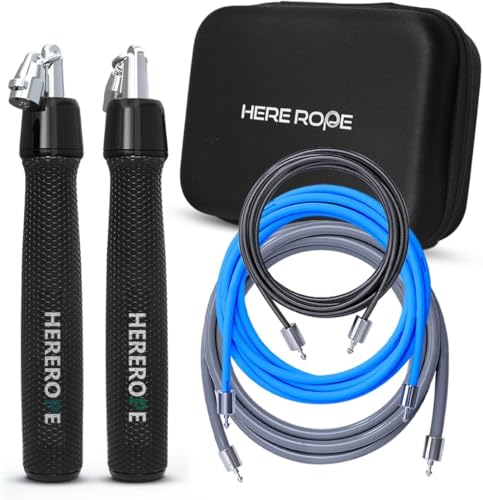
Three interchangeable ropes (1/6–1/2 lb) swap in seconds—train power, endurance, or speed. Grippy weighted handles, smooth bearings, and a travel case. Pick your pace.
$42.99 on Amazon
Price and availability are accurate as of 03/14/2026 01:35 am GMT and are subject to change.
When space is tight and time is short, this pick keeps things smooth and portable. It coils neatly, adjusts cleanly, and handles short, focused sets without getting in your way. Ideal for hotel rooms, garage corners, or early mornings when you don’t want to wake the house. If you’re practicing footwork or boxer steps, Hererope 3-in-1 Weighted Jump Rope Set with Interchangeable Ropes and Leather Grip keeps the rhythm consistent so you can settle in faster.
FAQ
Setup
- How long should my jump rope be for travel workouts?
Stand on the middle of the rope. The ends should reach your armpits for beginners, slightly below for speed. Trim or fold and clip the extra length so it packs clean.
- Can I jump in an apartment or hotel room without annoying neighbors?
Use a thick mat, soft-soled shoes, and smaller hops. Try boxer step or alternating foot instead of high jumps. Go cordless if ceilings are low or floors are loud.
Troubleshooting
- My rope keeps catching on my feet. What am I doing wrong?
Keep elbows close, hands at hip height, and spin from the wrists. Jump just an inch off the floor. Shorten the rope a bit and switch to a smooth surface or mat.
Buying decisions
- Speed rope vs weighted vs cordless: which should I pick?
Speed for fast cardio and double unders. Weighted for strength feel and slower rhythm. Cordless for tiny spaces, low ceilings, or travel days when noise is a concern.
If you want cardio you can take anywhere, a portable jump rope is hard to beat. The right one packs into your carry-on, lives in a drawer, and sets up in seconds. No ceiling drama. No big equipment footprint.
The big takeaway. Match the rope to your goal and your space. Speed ropes shine for skill and sweat, weighted sets add a little strength, and cordless handles are clutch for apartments and hotel rooms. Look for smooth bearings, an adjustable cable, and handles that feel good in your hands when you’re sweaty.
Start simple. Measure the rope to your armpits, warm up your calves, and live in the single bounce or boxer step for a week. It’s not about mastering double unders today. It’s about a tool you’ll actually use on busy mornings and late nights.
Your next steps: pick a rope and get moving
Quick decision recap
- New to jumping or coming back after a break. Choose an adjustable rope with a medium-weight PVC or coated cable. Smooth, not super thin. It will feel more stable and less whippy.
- Apartment or low ceilings. Go cordless or use a soft PVC rope with a mat to cut noise and protect floors.
- Chasing speed or double unders. Go with a steel cable speed rope with quality bearings and slim handles.
- Strength and conditioning focus. Pick a weighted set so you can swap cable weights or use weighted handles as you progress.
- Tight budget. A basic adjustable PVC rope with decent bearings will carry you far.
- Travel-only kit. Cordless handles or a foldable coated cable that won’t kink in your suitcase.
A 5-minute starter plan you can do today
- Two minutes easy bounce. Alternate feet or use the boxer step. Keep elbows in, wrists do the work.
- One minute skill focus. Slow and clean singles. Chest up, soft knees, quiet feet.
- One minute intervals. Ten fast jumps, ten slow jumps, repeat.
- One minute cooldown. March in place, ankle circles, quick calf stretch.
- Jot what tripped you up. Too long, too short, hands drifting wide. Adjust one thing tomorrow.
Edge cases and easy swaps
- Sensitive knees or returning postpartum. Use a mat, start with 15 to 30 second bursts, and keep jumps low impact. March-steps with the rope still count.
- Ceiling height or light fixtures. Test a single slow swing to check clearance. If it clips, go cordless.
- Shared walls or downstairs neighbors. Jump on a fitness mat or outside on concrete with supportive shoes. Avoid tile or slippery floors.
- Fraying cable or snapped end. Replace the cable before it whips you. Most handles accept third-party coated cables.
- Flying soon. Cordless handles pack light and avoid cable kinks. If you pack a cable, coil it in large loops, not tight wraps.
Keep learning and stay consistent
Simple maintenance checklist
- Coil loosely after each session so the cable doesn’t kink.
- Wipe handles and cable with a damp cloth. Sweat and dust make things slippery.
- Inspect the cable near the contact point. Swap it if you see cracks or exposed wire.
- Check screws and end caps every few weeks. A quarter turn can prevent mid-workout surprises.
- Jump on rubber, wood, or a mat when you can. It’s easier on joints and your cable.
Sources and further reading
- American Council on Exercise: technique cues and beginner jump routines.
- Physical Activity Guidelines for Americans: cardio intensity basics you can apply to short rope sessions.
- U.S. Travel-friendly workout guides from certified trainers on portable equipment and hotel-room workouts.
- For form breakdowns and footwork patterns, look for tutorials from certified coaches with slow-motion demos.
Related guides on ActiveBella
- Cardio you can do anywhere: short routines and timer ideas you can save for busy days. See our Cardio Workouts.
- Apartment-friendly gear: quiet mats, mini bands, and adjustable ankle straps for low-noise training. See our Adjustable Ankle Straps guide.
- More small-space picks: storage-friendly fitness gear, plus what to pack in a weekender gym bag. See our Fitness Gear Guides.
You don’t need an hour or a perfect setup. Pick one rope you’ll actually toss in your bag this week, give yourself five minutes, and build from there. Consistency beats intensity, every time.

Leave a Comment