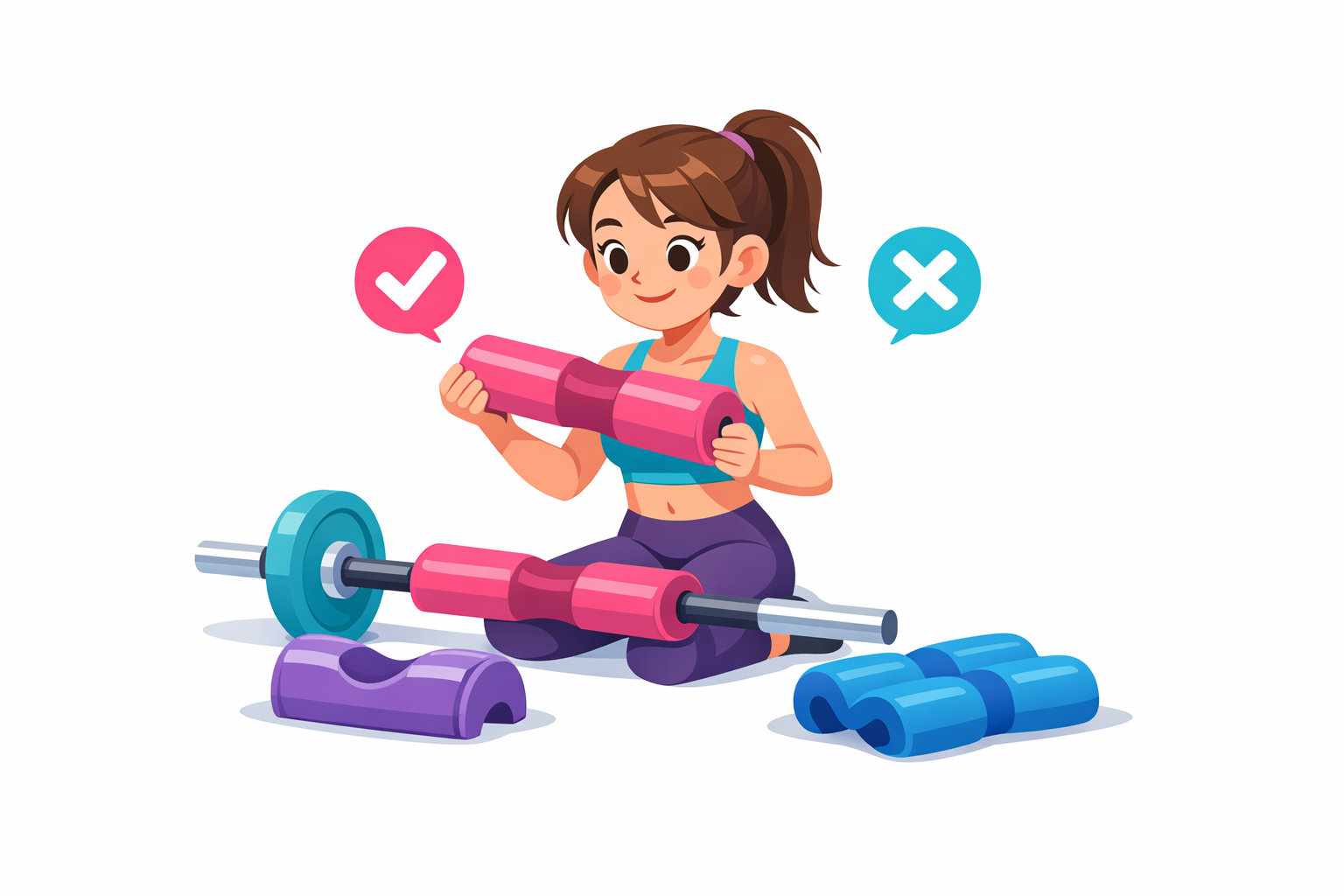

If you’ve ever cut a hip thrust set short because the bar felt like a steel pipe digging into your pelvis, you know why a good pad matters. The TRACE KASA 3‑in‑1 Barbell Pad Set aims to fix that and declutter your gym bag at the same time by bundling a barbell pad with companion straps and a carry solution.
We tested it over a normal training week with hip thrusts, walking lunges, back squats, and some pull work. We paid close attention to padding density, pressure distribution, grip against the bar, strap security, and how quickly everything set up between sets. We also checked seams, closures, and how the outer cover handled sweat and knurling.
Quick Comparison
What’s in this Article
- Quick take: who it suits and our one‑line verdict
- How we test and what matters with a 3‑in‑1 set
- The full review
- FAQ
- The quick take, who it suits, and our one-line verdict
- Your next steps and simple checklist
There are trade‑offs. Combo kits simplify shopping, but they rarely beat the very best single‑purpose pieces. Expect solid comfort and convenience, not the thickest hip thrust cushion on earth or the most specialized powerlifting straps. If you lift very heavy or use thick specialty bars, compatibility and pad compression will be your make‑or‑break.
Do this first: measure the bar you’ll use most. Standard bars are roughly 28–29 mm in diameter. If your gym has thicker bars or very aggressive knurling, you’ll want a pad with a snug but not fussy fit and a cover that can take abrasion.
Quick take: who it suits and our one‑line verdict
Ideal use cases
- Hip thrusts and glute bridges when you want reliable cushioning without babying the setup.
- Lunges and split squats where shoulder and collarbone comfort helps you actually finish your reps.
- Deadlift warm‑ups or RDLs if you like a pad for touch points on hips or thighs.
- Cable glute work if you want matching straps in the same kit.
Who should skip it
- Heavy hip thrusters who regularly load beyond what a mid‑density pad can handle without compressing flat.
- Powerlifters chasing maximal deadlift PRs who prefer dedicated lifting straps or bare hands for feel.
- Anyone who trains only with specialty thick bars or hex bars where pad fit gets tricky.
Our one‑line verdict
A practical all‑in‑one that covers the basics well and keeps your glute and pull days comfortable, with comfort and convenience winning over pure specialization.
How we test and what matters with a 3‑in‑1 set
Comfort under load
We look at pad thickness and foam density, how pressure spreads across the hips and shoulders, and whether the pad bottoms out under heavier sets. We also note any hotspots, edge bite, or collarbone pinch during lunges and squats.
Grip, slip, and setup
Bar compatibility, inner core grip, and closure style decide if the pad stays put. We test slippage on smooth and moderately knurled bars, then time how long it takes to mount and remove the pad between sets without losing your training groove.
Straps and carry factor
For the bundled straps, we check stitching, hardware, and how secure they feel under load. We test comfort on wrists and ankles, how easily they attach to bars or cable machines, and whether the bag actually fits the full kit without feeling like Tetris.
Edge cases to watch
Sweat and cleaning matter. We note how the cover resists moisture and whether it wipes clean or holds smells. We also flag how seams hold up against knurling, and whether smaller wrists or ankles can cinch down tight without digging.
The full review

Build a comfier, stronger lift: ergonomic squat pad, non-slip booty band, cable ankle straps, plus lifting straps & wrist wraps—support for squats, glutes, and grip.
$26.98 on Amazon
Price and availability are accurate as of 03/13/2026 02:43 am GMT and are subject to change.
Setup and first impressions
Real talk. Most of us want gear that sets up fast and just works. The TRACE KASA 3‑in‑1 Barbell Pad Set checks that box. Out of the bag you get three pieces you’ll actually use: the barbell pad, wrist support, and ankle straps, plus a simple carry bag so small parts don’t play hide and seek in your gym tote.
Setup took under a minute. We centered the pad on a standard gym bar, wrapped the closure tight, then gave it a quick twist test before loading plates. The surface feels soft to the touch, and the inner core feels firm enough that it doesn’t collapse in your hands. The wrist support goes on quickly and cinches without drama. The ankle straps have easy clip-in points for cable work and feel secure once fastened.
First impression vibes: clean, no-fuss look, nothing flashy, and the whole kit feels like it was made to be tossed in and out of a bag without babying it. If you want one bundle to cover glutes and pulls without overthinking it, the TRACE KASA Barbell Pad Set — Hip Thrust Pad, Ankle Straps, Hip Band, Lifting Straps, Wrist Wraps keeps it simple.
Performance in real use
We lifted with it for a full week of normal training, then a second week where we pushed a bit heavier. Here’s how it held up.
Hip thrusts
- Comfort: No sharp pressure on the hip bones, even when we ramped up. The pad spreads the load across a wider area, which is the whole point. It didn’t feel marshmallowy or bottom out on the concentric.
- Stability: On a bare chrome bar it stayed put once we took a second to really secure the closure. If you rush the wrap, it can rotate a touch on the first rep. Quick fix between sets did the trick.
- Set-to-set feel: The pad maintained its shape across working sets. No weird hot spots by set three.
Back rack lunges and split squats
- Comfort: Across the shoulders and collar area, the pad felt kind and forgivable. That little extra surface area mattered when stepping back into position.
- Control: Because it’s not overly bulky, we didn’t feel like we were fighting the pad to find our stance.
Deadlifts and rows with wrist support
- Grip help: The wrist support took the edge off our forearms on higher-rep sets. It won’t replace dedicated lifting straps for max pulls, but for mixed training days it gave enough support to keep focus on back and glutes.
- On-off speed: Quick to remove between lifts without unwrapping your life away.
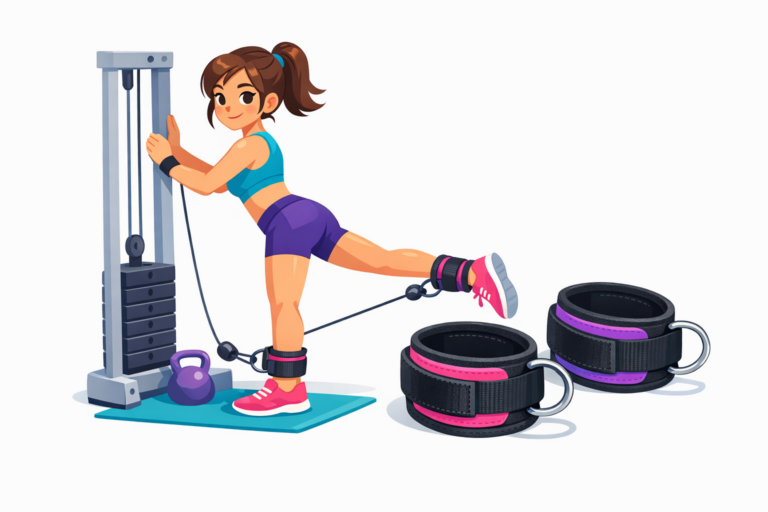
Cable kickbacks and side raises with ankle straps
- Security: Once clipped in, they didn’t shift mid-set. No pinching over leggings or bare skin.
- Feel: Slightly stiff on day one, then softened. They stayed flat against the ankle so the cable loads didn’t dig.
Sweat and cleanup
- Surface: We wiped the pad and straps with a damp towel after each session. No weird odors after a week. It dries fast when you air it out in the bag or on a bench.
Usability and ergonomics
- Centering the pad: The fastest way to nail alignment is to set the bar on your thighs first, then rotate the pad so the seam faces up before your first rep. That kept it from creeping.
- Closure confidence: Give the wrap a firm pull and press. If your bar is ultra slick, a little chalk on the bar knurl where the pad sits can add bite.
- Wrist support length: Plenty of adjustability. If you’ve got narrow wrists, start the wrap a touch higher on the forearm and finish snug at the wrist to keep overlap tidy.
- Ankle strap fit: Low profile enough under leggings and didn’t bunch. We liked clipping them so the attachment point was slightly off-center toward the outside of the ankle for smoother cable tracking.
- Carry and storage: The included bag actually earns its keep. The pad fits, the small parts tuck away, and you’re not fishing for a lost strap across the gym floor.
What I’d change
- Denser option: A higher-density version for lifters who thrust very heavy would be a welcome variant.
- Extra grip: A touch more anti-slip texture on the inside would help on very smooth bars.
- Shorter wrist wrap choice: A small-wrist length option would reduce bulk and overlap.
- Softer out of the box: Pre-softened ankle straps would skip that first-session stiffness.
- Quick-start card: A tiny setup guide with tips for hip thrust alignment and cable strap positioning would help newer lifters.
Who should buy it
- You hip thrust or do glute days weekly and want consistent comfort without hunting for a shared pad.
- You like a simple setup for lunges and split squats that doesn’t bite into your shoulders.
- You mix in cable kickbacks, side raises, or abductions and want ankle straps ready to clip.
- You prefer one bundle that covers several needs and lives in your gym bag.
- Home gym lifters who want soft goods that are easy to keep clean and organized.
Who should skip it
- Powerlifters or thrust specialists moving very heavy loads who want the densest, most rigid thrust-specific pad.
- Minimalists who hate carrying anything extra. This is still a full pad plus accessories in a bag.
- If your gym already stocks great pads and you never use cable machines, the bundle may be overkill.
- If you rely on heavy deadlift days with lifting straps only. You might prefer a dedicated strap style instead of general wrist support.
Verdict
We like this set because it solves real problems without fuss. The pad is comfortable under load, the wrist and ankle pieces cover common accessory work, and the bag keeps the chaos in check. It’s not the stiffest pad on the planet and it can rotate if you rush the wrap, but tighten it right and it behaves. For most lifters who split time between hip thrusts, lunges, rows, and cable glute work, the TRACE KASA 3‑in‑1 Barbell Pad Set earns its space in the gym bag. If you live under max loads and want the densest thrust block out there, look elsewhere. For the rest of us who want comfort, convenience, and easy care in one bundle, this is a smart grab.
FAQ
Setup and learning curve
- Is there a learning curve to using the 3‑in‑1 set for hip thrusts and lunges?
A short one. Center the pad on the bar, rotate it so the thickest part sits on your hips, and start with a warm‑up set to check pressure points. For lunges and squats, align the pad with your traps or collarbone and keep it from rolling before you unrack. Adjust the wrist and ankle straps so they are snug but not cutting off circulation.
- How do I stop the pad from slipping during sets?
Tighten any closure fully, then press the pad into the bar to seat it before lifting. Keep the logo or seam facing up so it does not roll to the side. If your leggings are slippery, place the pad against skin or a cotton layer, or lightly chalk the outside where it contacts your clothing.
Compatibility and fit
- Will this work on both Olympic and standard bars?
Most barbell pads fit Olympic bars in the typical gym range and many standard 1‑inch bars. You want a secure wrap with no free spin and no visible gaps. If you lift on a thicker specialty bar, test the fit first or check the inner diameter listed by the seller.
- Who should skip this bundle and buy separate pieces?
If you hip thrust very heavy and want max cushioning, a dedicated extra‑thick thrust pad or foam block is better. If you already own wrist straps and ankle cuffs you love, you may not gain much here. If your gym only allows bars without any padding, this set will sit in your bag.
Durability and care
- How do I clean it and make it last?
Wipe the pad, straps, and bag after each session with a damp cloth and mild soap, then air dry. Avoid soaking, harsh chemicals, and hot dryers. Store the pad flat so the foam does not crease. If hook‑and‑loop loses grip, clear lint with a small brush to restore hold.
If you want one bundle that covers hip thrusts, lunges, and basic cable glute work without overthinking it, the TRACE KASA 3-in-1 Barbell Pad Set gets the job done. The pad softens the hit of the bar on your hips, the straps handle day-to-day pulls and ankle cable moves, and the carry bag keeps it all in one place. Simple, comfy, easy to toss in your gym bag.
We’d buy it if we were getting started, training at home, or staying in the moderate-weight zone. It’s not trying to be a heavy-duty hip thrust pad for max PRs or a competition-level strap-and-wrap setup. If you lift very heavy or prefer specialized gear for each task, you’ll be happier going the dedicated route.
Two quick next steps if you’re on the fence: 1) Measure your bar and make sure it’s a standard diameter so the pad fits snug. 2) Decide if you truly want a tidy all-in-one or if you’d rather piece together a thicker hip thrust pad and higher-support straps. If you’re leaning bundle, this set is an easy yes.
The quick take, who it suits, and our one-line verdict
Buy it if
- You want one purchase that covers hip thrusts, lunges, and cable glute work.
- You’re in the beginner to intermediate range or train mostly at home.
- You value comfort and convenience more than max-load performance.
- You want a pad that’s simple to strap on and a bag that keeps it organized.
Skip it if
- You hip thrust very heavy and want a wider, denser, dedicated thrust pad.
- You prefer specialized wrist straps or wraps for heavy pulls.
- Your gym has specialty bars with nonstandard diameters that might not seat a typical pad well.
- You’re sensitive to any pad shift and want zero movement under near-max loads.
Edge cases worth noting
- If your gym’s bars are worn or extra slick, plan to set the pad carefully and use the center knurl as a reference point to reduce rotation.
- If you’re prone to hip bruising at higher reps, a wider thrust-specific pad may still be the better call, especially for long sets with shorter rest.
Your next steps and simple checklist
Two things to do today
- Measure your bar. Most of us lift with standard or Olympic bars. If your gym uses anything odd, check fit before you commit.
- Pick your path. Bundle for simplicity, or go dedicated if you’re chasing heavy numbers and want max support for each move.
Fit and setup checklist
- Center the pad on the bar and close it tight before you load plates.
- Place the seam off your hip bones to minimize pressure points.
- For thrusts, roll the bar into position, then take a breath and check that the pad hasn’t shifted before your first rep.
- For lunges, grip just outside the pad so it doesn’t rotate as you step.
- On cable work, clip the ankle strap and give it a light tug before the first rep to make sure the connection feels secure.
- After training, air-dry the set before tossing it back into the bag.
Still comparing? Good alternatives
- Dedicated hip thrust pads: Wider and denser. Best for heavy thrusts and sensitive hips. Bulkier in the bag and single-purpose.
- Standard barbell pads: Cheaper and easy to find, but usually thinner and more prone to squish or spin under load.
- Separate wrist and ankle straps: Lets you pick exactly the support level and hardware you want, but you’ll spend more time and money piecing it together.
Overall verdict in one line: A comfortable, tidy bundle for everyday strength work that makes hip thrusts and glute days less fussy, as long as you don’t need heavy-duty, specialized gear.


Leave a Comment