
What’s in this Article
- What a good sports bra should do
- Start here: confirm your size today
- Recommended picks (optional)
- FAQ
- Quick fixes and real-world troubleshooting
- FAQ for first-timers
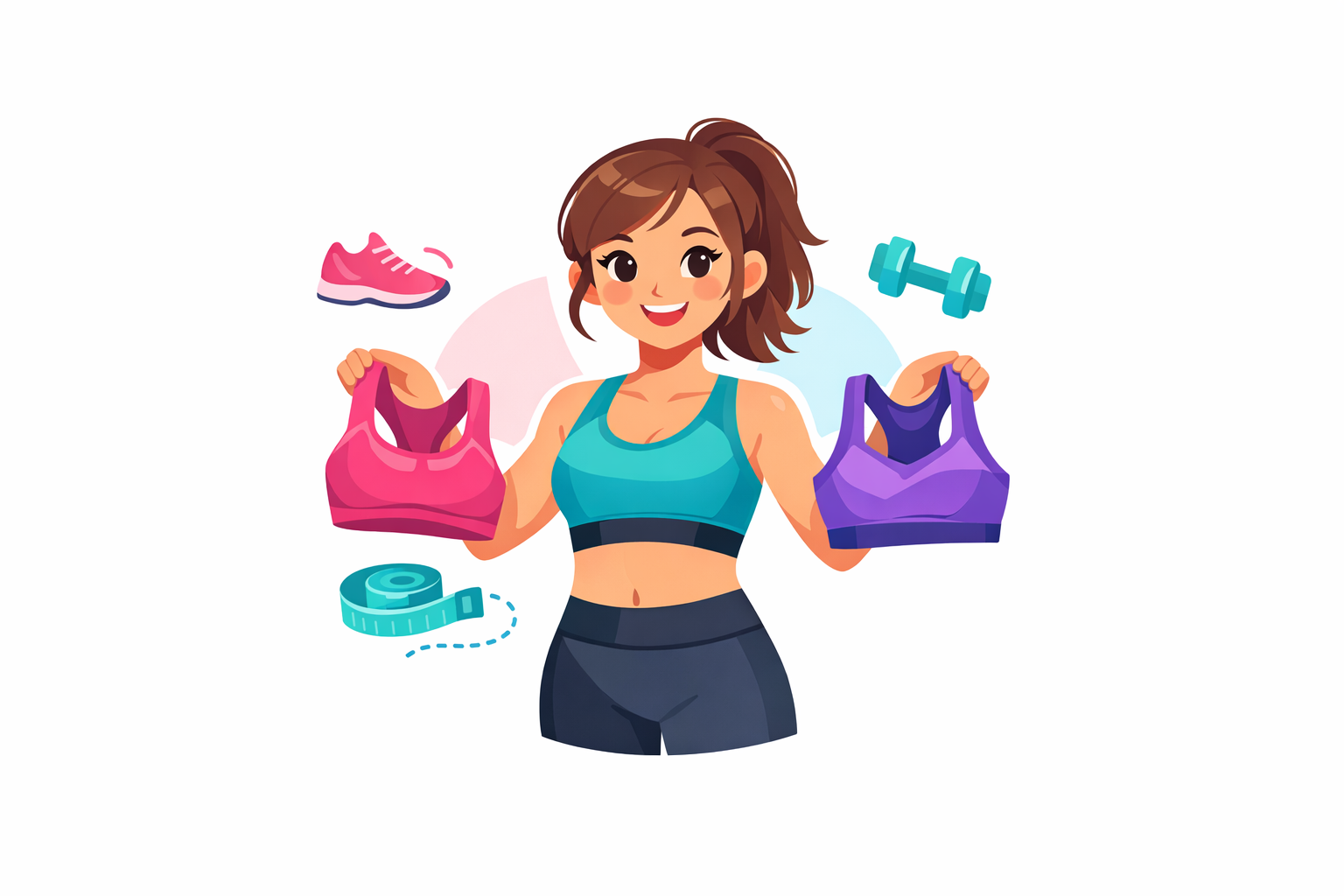
Finding the right sports bra should not be confusing. We want support that keeps us focused on the workout, not the bounce. If your current bra leaves marks, rides up, or makes you dread jumping jacks, you are in the right place.
In this guide we break down fit and sizing in plain English. We will explain impact levels without jargon, show you how to measure at home, and help you match support to your activity and your body. Expect practical tips, simple tests you can do in the mirror, and zero fluff.
Bodies change. Weight shifts, hormones fluctuate, pregnancy and postpartum happen, and some of us have implants or asymmetry. That is normal. We will point out where adjustability matters and when to consider a different style.
Do this first: grab a soft measuring tape. Exhale and measure snug right under your bust. Then measure around the fullest part of your bust while standing tall. Jot both numbers down. We will use them shortly.
What a good sports bra should do
A good sports bra keeps movement comfortable and controlled so you can breathe and move freely. Use these criteria when you try one on:
- Bounce control: Vertical and side-to-side movement stays minimal when you jog in place.
- Band stability: The band sits level around your body and does not ride up when you raise your arms.
- Cup integrity: Each breast is contained without spillage or crushing. No uniboob if you want separation.
- Strap comfort: Straps do not dig in or slip, and adjust easily without loosening during activity.
- Moisture and chafe: Fabric wicks sweat, seams are smooth, and the underband feels soft against skin.
- Breath and posture: You can take a deep breath and rotate your shoulders without restriction.
Quick fit checks you can do in the mirror
- The two-finger test: Slide two fingers under the band at the back. It should feel snug but not tight. More than two fingers means size down in the band.
- The jump test: Do 10 small hops. If you feel sharp bounce or need to hold your chest, you likely need more support or a different style.
- The raise test: Lift your arms overhead. If the band creeps up, the band is too loose or the straps are over-tightened to compensate.
Comfort signals that predict long-run success
- You forget about it after five minutes of movement.
- No pinching at the armpits, no gaping at the neckline, and no rubbing at the center gore or underband.
- Fabric feels dry against skin within a few minutes of light sweat.
Common edge cases to keep in mind
- Between sizes: If the band fits on the tightest hook right away, try a smaller band and larger cup. If you sit between cup sizes, try the larger cup or a style with adjustable straps and a back closure.
- Postpartum or cycle changes: If your size swings during the month, look for adjustable straps and a hook-and-eye back. Consider two bras for different weeks.
Start here: confirm your size today
Your best support starts with an accurate current size. Most of us change sizes more than we think. Measuring takes two minutes and saves weeks of trial and error.
Quick at-home measuring
- Underbust: Stand straight, exhale, wrap the tape under your bust where the band sits. Keep it parallel to the floor and snug. Write this number down.
- Bust: Wrap the tape around the fullest part of your chest without squashing tissue. Keep the tape level and relaxed. Write this number down.
- Note your posture: If you are very full on top or bottom, repeat the bust measure leaning forward 45 degrees and take the larger reading.
We will translate these numbers into a starting bra size, then adjust based on band tension and cup coverage.
Band vs cup, who does what
- The band provides most of the support. If bounce feels wild, do not just tighten straps. Check the band first.
- Cups control movement of each breast. If you spill, quad-boob, or feel smashed, the cup is off. You may need more coverage, a different shape, or an encapsulation style.
- Straps fine-tune lift. They should not carry the whole load. If your shoulders ache, the band is likely too loose.
When measurements are tricky
- Asymmetry: Fit the larger side. You can add a removable pad to the smaller side or look for bras with individual cup adjustments.
- Implants or very firm tissue: Compression-only styles may feel uncomfortable. Prioritize encapsulation with smooth cups and a stable band.
- Very small or very full busts: Traditional size charts can miss you. Focus on band firmness and cup shape rather than just the letter on the tag.
Recommended picks (optional)
A simple starter option

$34.95 on Amazon
Price and availability are accurate as of 09/28/2026 08:19 am GMT and are subject to change.
New to sports bras and not sure what you like yet? This is a low-stress pick for easy walks, yoga, and strength days. Comfortable enough to wear under a tee while you figure out your size and strap style without overthinking it.
An everyday all-rounder
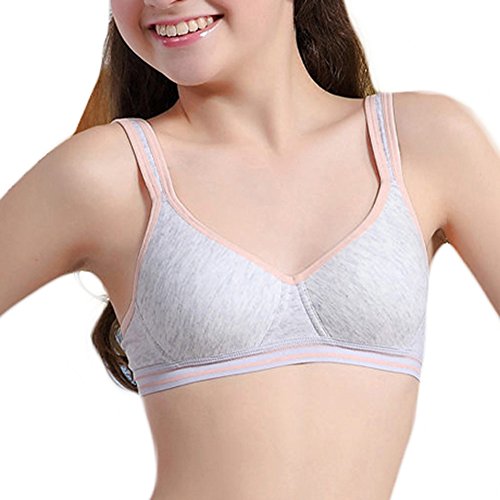
Comfy cotton stretch, adjustable straps/hooks, and wire‑free light padding—gentle support that grows with her. Explore cute colors and A/B sizes.
Price and availability are accurate as of 09/27/2026 11:42 am GMT and are subject to change.
Good if you do a bit of everything during the week. It suits mixed workouts like circuits, cycling, and casual cardio, so we can grab one bra and get on with it.
Added support for fuller busts

Molded cups that lift and lock in, cushioned adjustable straps, and stretchy spandex/nylon—steady support from HIIT to yoga. Curious if it’s your fit?
$23.99 on Amazon
Price and availability are accurate as of 09/28/2026 04:20 am GMT and are subject to change.
Helpful if you wear larger cup sizes and want more hold without feeling squeezed. A solid pick for classes with bouncing and quick moves when you want stay-put support and breathable comfort.
Easy on and off

Cute criss-cross back meets high-impact support. Full-coverage, stretchy fit with removable pads and moisture-wicking fabric – great for runs, yoga, and everyday wear.
$19.78 on Amazon
Price and availability are accurate as of 09/27/2026 05:18 pm GMT and are subject to change.
If you struggle wriggling out of tight bras after a sweaty workout, this one keeps getting dressed simple. Great for anyone with limited shoulder mobility or who prefers quick changes in the locker room.
FAQ
Sizing and fit
Q: How snug should the band feel?
A: Firm on the loosest hook or default setting. We should slide two fingers under the band. If it rides up when we lift our arms, size down in the band.
Q: I’m between sizes. What should we do?
A: Adjust band and straps first. If the band fits but cups wrinkle or spill, change the cup size. If cups feel right but the band is loose or tight, use sister sizing. Down a band, up a cup or up a band, down a cup.
Support and activity
Q: Do we need different bras for yoga and running?
A: Usually yes. Low or medium impact works for yoga, walking, and strength. High impact is best for running, HIIT, and jumping, especially for fuller cups. If in doubt, choose higher support.
Care and longevity
Q: How do we wash it and when should we replace it?
A: Hand wash or use a mesh bag on gentle. Cold water. Skip fabric softener. Lay flat to dry. Replace when the band is stretched out, straps slip after tightening, cups crease, or bounce control fades. For regular use, that is often 12 to 18 months.
If we had to boil it down, a good sports bra should lock down bounce without squeezing the life out of us. It should sit snug, breathe well, and stay put while we move. When we get the size right, match support to the workout, and choose features that solve our actual pain points, everything feels easier.
From here, our day to day changes look simple. We measure our current size instead of guessing from old memory. We grab support that matches our movement and cup. We try on with intention, jump test in the fitting room, and walk away with bras that make workouts feel better from the first mile to the last burpee.
Quick decision recap
- Start with today’s size using a tape and a mirror. Round to the nearest whole number for band and cup.
- Pick support by movement and cup. Low for yoga and walking. Medium for strength and cycling. High for running and HIIT. Size C and up often need encapsulation or hybrid for high impact.
- Choose structure. Encapsulation for shape and control. Compression for simple hold. Hybrid if you want both.
- Dial in features. Adjustable straps if your shoulders slope. Racerback or crossback for extra lift. Front or back closure if you want a firm band with easy on and off.
- Fabric and finish. Moisture wicking, smooth seams, and a wide band if you’re prone to chafe. Light removable pads if you want modesty without bulk.
Mini action plan for your next try-on
- Do the jump test and a quick jog in place for 20 seconds.
- Check the band. It should sit level, snug on the loosest hook, and you can fit two fingers under it.
- Check the cups. No gaping, no spillage at the top or sides.
- Adjust straps last. They should lift without digging and let you breathe deeply.
- Move through your workout basics. Reach overhead, twist, squat, and plank.
- Note what rubbed or moved. Fix with features, not just size.
Quick fixes and real-world troubleshooting
The band rides up or shifts
- Go down one band size. If the cups feel too small after that, go up one cup at the same time.
- Start on the loosest hook so you can tighten as the elastic relaxes.
- Try a closure instead of a pull-on if you want firm support without a wrestling match.
Spillage, gaping, or odd cup shape
- Top or side spillage means the cup is too small or the style is too shallow. Go up a cup or switch to encapsulation with more coverage.
- Gaping means the cup is too big. Go down a cup or try molded cups if you prefer structure.
- If you have wide-set breasts, look for cups with a wider center panel. Close-set often prefer a taller center for control.
Straps that dig or slip
- Digging means the band is not doing enough work. Tighten the band or go down a band size.
- Slipping straps need more adjustability or a different shape. Try racerback or J-hook convertibility for extra lift.
- Broad shoulders often like straight straps with full adjusters. Narrow or sloped shoulders often do best with crossback.
Chafe under the bust, at the sides, or along seams
- Choose wider, softer bands and flat seams. Look for brushed elastics and bonded edges.
- Moisture makes chafe worse. Go for high wicking fabrics and mesh zones where you sweat most.
- Pre-run tip. A swipe of anti-chafe balm under the band and along the side seams can be a day saver.
Uniboob or too much bounce
- If you feel squashed or still bouncing, switch from pure compression to encapsulation or a hybrid design.
- Try a higher neckline and a racerback for vertical control during sprints and jumps.
- For cup D and up, molded or seamed encapsulation often gives better shape and stability than a stretchy bralette.
Five-minute try-on checklist
- Band check. Level all around, two-finger snug.
- Cup check. Smooth top line, no spill, no gaps.
- Strap check. One-finger comfort, no dents.
- Breathe test. Big inhale with ribs expanding. No pinching.
- Motion test. Jump, jog, reach, plank. Zero bounce pain.
- Skin check. No scratchy tags or seams rubbing hot spots.
FAQ for first-timers
How many sports bras do we really need
- If you work out 2 to 3 times a week, start with two. Rotate to give each bra a day to recover.
- If you work out most days, keep three to four. Mix support levels so you are not using a high impact bra for every walk.
How often should we replace a sports bra
- When the band stretches out on the tightest hook, the straps slip no matter what, or bounce increases.
- Average is 6 to 12 months with regular use, faster if you run in heat or wash aggressively.
- Look for rippling elastic, frayed seams, and cups that no longer spring back.
Can we wear a sports bra every day
- Yes if it is breathable, not overly tight, and you are comfortable. Choose low or medium support for daily wear.
- Give your skin a break. Rotate styles and fabrics so sweat does not sit against the skin all day.
Underwire or wireless for larger cups
- Both can work. Underwire gives defined lift if the fit is right and the wire sits flat on the ribcage. Wireless encapsulation can be just as supportive with the right structure and band.
- If you feel poking, that wire is either the wrong size or the wrong shape for your root. Try a wider wire or switch to a firm wireless hybrid.
Washing and care to make it last
- Cold wash, gentle cycle, and a lingerie bag to protect straps and mesh.
- Skip fabric softener. It clogs wicking fibers.
- Air dry flat. Heat breaks down elastic faster.
Special situations and caveats
- Pregnancy and nursing. Expect size shifts. Look for stretchy bands with room to adjust, easy open straps, and soft inner fabrics. Recheck size each trimester and post weaning.
- Post-op or after an injury. Ask your care team about compression needs and closures. Front zips or hook fronts can help with limited range of motion.
- Hard-to-find sizes like 30G or 44F. Seek a specialty fitter or online retailers with free exchanges. Encapsulation with solid bands is often the most reliable starting point.
If you remember nothing else, start with a fresh measurement, choose support to match your movement and cup, and let comfort be your tie breaker. The right sports bra should disappear once the warmup starts.
Leave a Comment