
What’s in this Article
- What durability really means for leggings, bras, and tops
- Tools you already have that work for testing
- FAQ
We love cute sets and power leggings, but nothing kills the vibe faster than pills on the thighs, a waistband that rolls, or dye that bleeds on your favorite white socks. The good news is we can spot many of those issues before the first long run or sweaty class, using things we already have at home.
This guide is for women who want their gear to keep up with real workouts, not just mirror selfies. If you lift, run, hike, cycle, or chase kids around the park, these quick checks will help you separate keepers from quitters. No lab coat required.
Success here looks simple. In 30 minutes we can find out if fabric springs back after a stretch, if seams are likely to pop, if colors might transfer, and if the material will pill where thighs touch. We will also learn how to care for tricky fabrics so they last longer.
A quick reality check. At-home tests cannot copy a thousand abrasion cycles or months of UV exposure. Natural fibers and brushed fabrics can behave differently from slick synthetics. Dark dyes and neon pigments can vary by batch. That is normal. We are not chasing perfection, just enough data to make smart choices.
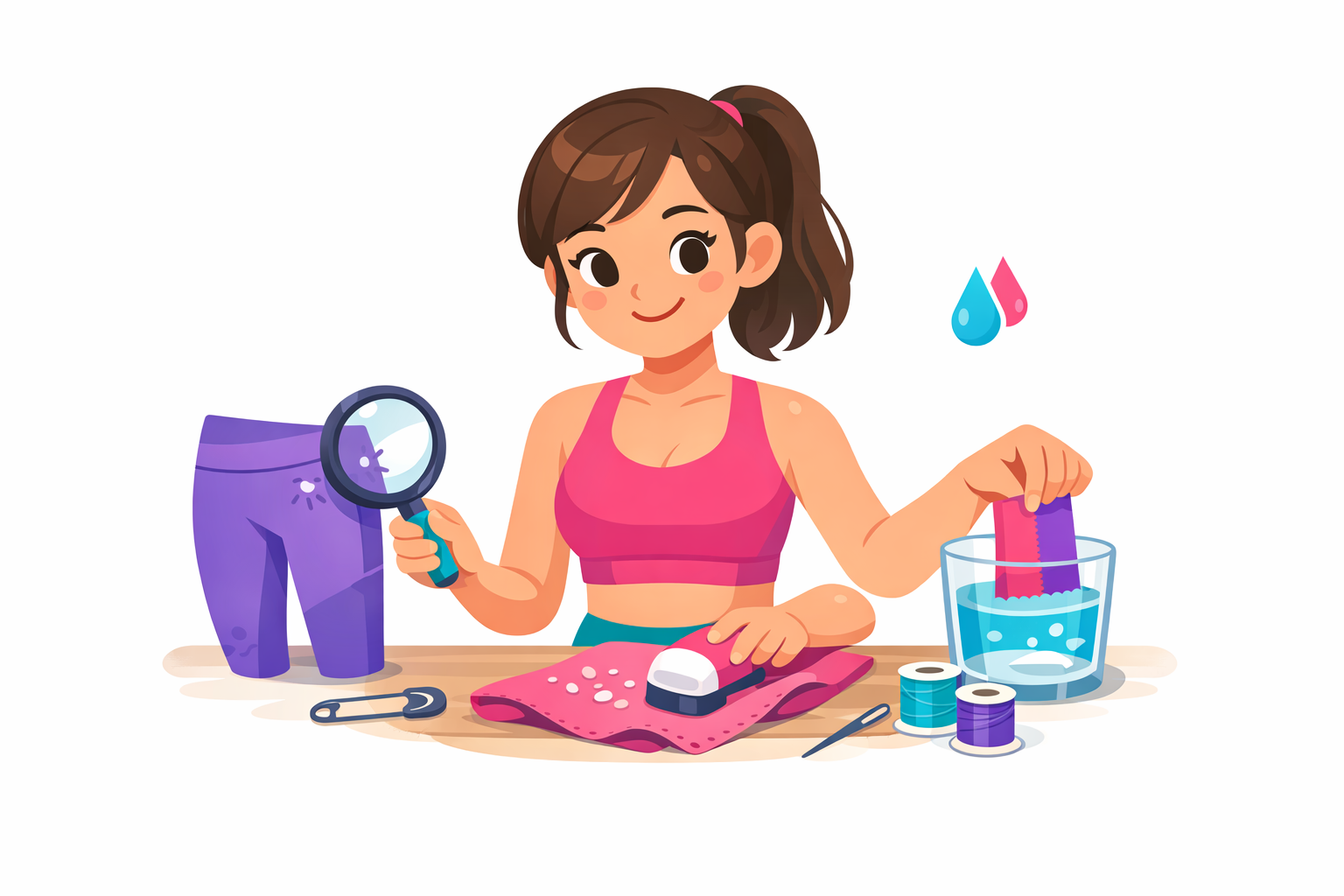
Do this first: gather a tiny kit so you are ready to test. Grab a white cloth or old sock, a coin, a paper clip or safety pin, a lint roller, a ruler or tape measure, a spray bottle, mild detergent, a notebook, and your phone flashlight. That is it.
What durability really means for leggings, bras, and tops
Leggings: stretch, squat, and abrasion
For leggings, durability is about recovery, opacity, and surface wear. We want the fabric to bounce back to its shape after deep stretches without bagging at the knees. We want full coverage in a squat with no sheerness or grin-through at the seams. We want the outer face to resist pilling where thighs brush or where a backpack rubs. Key criteria to watch: stretch recovery, squat opacity, pilling resistance, seam stability, and waistband grip.
Bras: elastic memory and stitch security
Sports bras live or die by elastic quality and construction. Good elastic snaps back after a sweaty session and wash. Straps should not creep longer during a workout. Stitches at the band and cup should feel flat and secure with no popping sounds when you pull them on. We also look for recovery after a gentle stretch and whether hardware digs or twists. Key criteria: elastic recoil, strap stability, seam strength, and shape retention.
Tops: colorfastness and odor control
Tops often fail on color and smell. Bright dyes can bleed onto skin or lighten around the armpits. Some knits hold onto odor even after washing. We want colors that stay put, fabrics that dry fast, and fibers that do not get swampy in the first mile. Key criteria: dye transfer, sweat dry time, odor retention, and snag resistance from backpack straps or pet claws.
Tools you already have that work for testing
Kitchen drawer kit
A coin helps you simulate abrasion by rubbing lightly on a hidden spot to see if fuzz lifts. A paper clip or safety pin can mimic a snag so you can see if loops pull easily. A ruler or tape measure tracks stretch and recovery so you are not guessing.
Laundry and bathroom helpers
A white cloth and mild detergent tell you fast if dye is going to run. A spray bottle lets you spot-test how fabric looks and dries when damp. A lint roller reveals surface fuzz and pet hair cling in seconds.
Phone-powered checks
Your phone flashlight will show sheer spots at stress points and help you inspect stitches inside garments. The camera is great for before and after photos so you can compare recovery, pilling, and color shift without trusting memory.
FAQ
Setup and safety
Q: Will these tests damage my clothes?
A: They should not if we keep them light and targeted. Test on an inside hem or waistband first. For pilling, use a clean cotton sock or denim and make 10 gentle circles, then check. For snags, lightly brush with the dull edge of a key. Stop if we see fuzz or a pulled loop. Skip sandpaper, steel wool, and harsh scrubbing. Keep pets away during tests.
Q: What is the safest way to check colorfastness?
A: Dampen a white cloth with cool water and a drop of mild detergent. Rub the inside seam for 10 seconds. If color transfers, wash the item alone in cold water the first time. Use a mesh bag to cut friction. Avoid hot water, bleach, and fabric softener during testing.
Troubleshooting results
Q: My leggings pass the squat test but slide during runs. What did I miss?
A: Do a waistband hold test with jumps and a short jog. If they creep, the elastic or fabric recovery is weak for impact. Size and rise matter, and sweat can make slick fabrics slide. Try a wash to reset recovery and skip fabric softener. Look for a drawcord, higher rise, or more compression for runs.
Pacing and common mistakes
Q: How fast should we run all the tests to keep results fair?
A: Do the 30 minute checks in one session, but space the heavier ones. Give fabric 10 to 15 minutes to recover after big stretches. Do abrasion on different spots. Wash once on cold and air dry before we make final calls. The biggest mistake is rushing and over-scrubbing the same area.
We just walked through simple ways to test pilling, snagging, stretch, color transfer, and even stink at home. No lab coats. Just honest checks that tell us which leggings and bras can keep up with real workouts and laundry day.
The best part is the confidence you get. Instead of guessing, we can keep what performs, tweak care where it helps, and stop wasting time on pieces that quit early. A few minutes with these tests up front can save you a lot of annoyance later.
Remember, one fail does not always mean toss it. Sometimes a wash routine change or a tiny repair turns a near-miss into a favorite. The goal is smarter choices and longer wear.
What to do when a piece fails a test
H3 Decision recap you can trust
- Keep it in rotation if it passes most tests and only needs small tweaks. Think light pilling or slight sheerness that disappears with the right underwear.
- Put it on probation if it needs a fix or a special care rule. Re-test after two wears and washes.
- Return or exchange if seams pop, waistbands collapse, or color bleeds even in cold water with similar colors.
- Repurpose for lower impact days if compression is fading or fabric looks tired but still feels comfy.
- Retire or recycle if fabric thins, holes spread, or it triggers skin irritation.
H3 Quick fixes to try before you give up
- Light pilling: de-pill with a fabric shaver, then wash inside out. Use a mesh bag for future loads.
- Sheerness: size up or pair with darker, seamless underwear. Skip high heat in the dryer to protect opacity.
- Waistband roll: steam lightly and let it cool flat. If elastic twisted in the channel, work it back flat by hand.
- Seams and stitches: snip loose threads clean. If a stitch line is failing, a basic zigzag repair can hold. If a safety seam popped on day one, that is a return.
- Color rub-off: lock dye with a vinegar soak or a color-catcher sheet in the next wash. If it still bleeds, stop trusting it with your whites.
H3 Repurpose or retire with intention
- Pieces that lost compression can still be great for walking, yoga, or travel days.
- Shorts that pill at the thigh work under dresses or as sleep shorts.
- If fabric is thinning in high stress zones, retire before it fails mid-squat. No one wants that surprise.
H3 Return, exchange, or escalate
- If a piece failed two or more durability tests within the first few wears, contact customer support.
- Share your test results and photos. Brands take clear feedback seriously.
- Ask about exchanges for a different size or fabric blend. Sometimes the right fabric family solves the problem.
Fast action plan for your drawer this week
- Pick two pieces you wear most and run the stretch, squat, and waistband checks.
- Wash both inside out in cold water. Air dry. Note any change.
- Do a 60-second pill and snag test on high friction zones.
- If a piece worries you, fix or set rules for it. If it fails, start the return or repurpose path.
- Keep notes in your phone so you remember what worked.
FAQ: your top testing and care questions
H3 How often should we re-test
- Do a quick spot check every 10 wears or anytime fit feels off. Stretch and waistband recovery tell you the most.
- Re-test after any routine change. New detergent, a different dryer setting, or a new gym surface can shift results.
- If you are training more days per week, fabrics get less rest time. Expect compression to rebound better if you give pieces a full day to recover between wears.
H3 Do fabric blends change your approach
- High nylon blends are usually smooth and cool. Great for abrasion resistance but can snag on rough edges. Be extra careful with benches and Velcro.
- Polyester blends tend to pill less and dry faster. They can hold odor if you skip pre-rinses after sweaty sessions.
- Added elastane gives snap-back but hates heat. Avoid hot water and hot dryers to protect recovery.
- Ribbed or brushed fabrics feel cozy. They show pilling sooner, so use mesh bags and wash inside out.
- Edge case: neon and saturated colors. They are more likely to bleed. Wash them with similar tones for the first few cycles.
H3 Care tweaks that stretch lifespan
- Wash inside out, cold water, gentle cycle. It protects the face of the fabric and trims pilling.
- Use a mesh bag to reduce abrasion against zippers and towels.
- Skip fabric softener. It can coat fibers and trap stink.
- Air dry flat or hang by the waistband. Heat hurts elastic recovery and opacity.
- Rinse right after a very sweaty workout if you cannot wash soon. A quick shower rinse prevents stink set-in.
- Edge case: chlorine, sunscreen, and bug spray can stain or degrade fibers. Rinse after pool days and let sunscreen dry fully before pulling on leggings.
You have everything you need to judge what stays and what goes. Keep a tiny note in your phone with your pass list and any care rules. When you shop again, your tests and notes make it easy to choose fabrics and fits that match how you train. We all deserve gear that works as hard as we do.
Leave a Comment