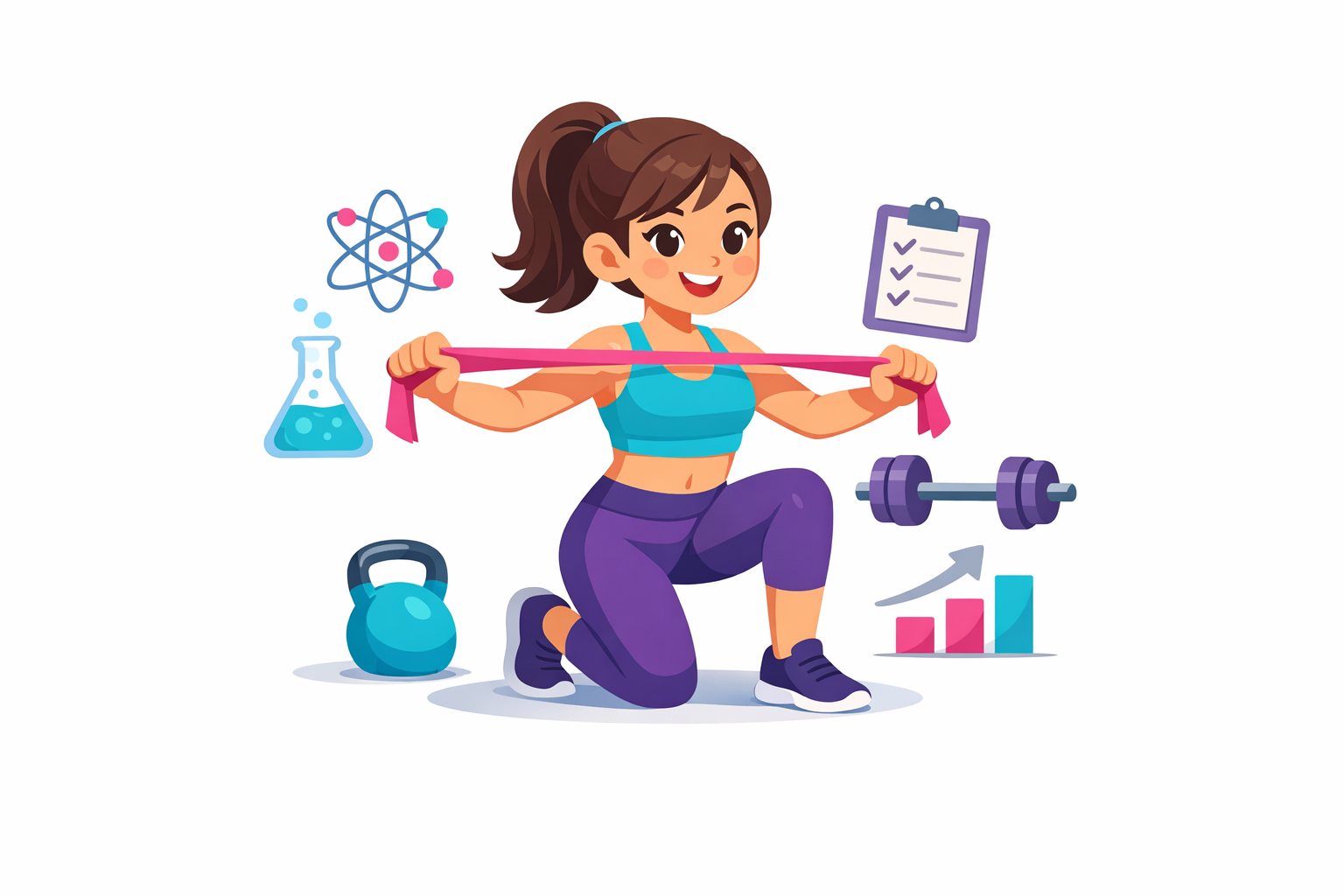

Ever grabbed a stretchy band, did a few reps, and wondered if it actually “counts”? You are not alone. Resistance bands look simple, travel well, and show up in rehab clinics and gym bags. But are resistance band workouts effective for real strength and muscle?
Short answer, yes. Bands can build strength and muscle, improve mobility, support rehab, and deliver solid conditioning. They are not magic, and they are not a total replacement for a heavy barbell if max strength is your main goal. For most of us, they work when we use enough tension, train with good form, and progress over time.
What’s in this Article
- Short answer: who bands work for and what they do best
- What counts as a “resistance band”
- FAQ
- Choose your path from here
- Quick action checklist
Here is our plan. We will keep it practical, touch the science without drowning in it, and give you clear training options. We will look at what bands do well, where they fall short, and how to program them so your work shows up in your body and your day.
Before you start, do this first: pick a band that lets you do 8 to 15 reps with control on a row. If you can easily do more than 20, level up the tension. If you cannot reach 8 with good form, go lighter. This simple check sets you up for wins, not frustration.
How we judge effectiveness:
- Can you create enough tension to challenge the target muscle
- Can you move through a full, comfortable range of motion
- Can you add overload over time by increasing band thickness, stretch, reps, or sets
- How stable and safe is your setup and anchor
- Is muscle activation high where you want it
- Does the tool fit your space, budget, and schedule
Limitations to know up front:
- Bands make the top of the movement hardest, which is not the same as a barbell. Great for joints, not always ideal for max strength
- If your anchors are sketchy or your band is worn out, safety drops fast. Check gear before you pull
Short answer: who bands work for and what they do best
Strength and muscle
- Are resistance bands effective for strength and size? Yes, especially for beginners and intermediates. Studies show similar muscle activation to free weights when sets are hard enough, close to fatigue, and volume is matched.
- Do resistance bands build muscle? They can, if you apply progressive overload. Increase tension or total work over weeks, and use 8 to 30 rep ranges taken near failure.
- Where they fall short. If your goal is a 1-rep max deadlift PR or elite-level hypertrophy, you will probably need heavy free weights or machines to keep pushing absolute load.
Mobility, pain, and rehab
- Bands shine for joint-friendly resistance, gentle end-range work, and controlled tempos. Physical therapy often starts with lighter therapy bands to rebuild motion and strength.
- Great for the shoulders, hips, and knees because you can fine-tune resistance and keep it smooth through the whole range.
Conditioning and travel fitness
- Bands turn any living room or hotel room into a mini gym. Circuit-style sessions can boost heart rate and muscular endurance.
- Easy to pair with bodyweight moves for a quick full-body hit in 15 to 25 minutes.
What counts as a “resistance band”
Long loop bands
Continuous rubber loops that vary in thickness. Super versatile for rows, presses, pulls, squats, assisted pull-ups, and adding resistance to bodyweight moves. You can double them for more tension or choke them around an anchor.
Tube bands with handles
Rubber tubes with carabiners and clip-on handles, often bundled with door anchors and ankle straps. Good for rows, presses, flyes, curls, and triceps. Easy to set up at door height levels for different angles.
Therapy bands
Flat, non-loop latex or latex-free strips used in rehab and light fitness. Great for shoulder external rotations, gentle rows, and mobility drills. Light to medium tension, very joint friendly.
Fabric hip or booty bands
Short loops, usually fabric with grippy lining. Best for glutes and hips. Think lateral walks, squats with abduction, hip thrust burnouts, and warm-ups. They do not replace heavy lower-body loading but they light up your glutes fast.
FAQ
Programming and results
Q: Can resistance bands build muscle, or just “tone”?
A: They can build muscle if you train close to failure. Aim for 6 to 30 hard reps, keep adding tension or reps over time, and control the tempo. The pump will feel real, especially for glutes, shoulders, and back.
Q: How do I combine bands with weights for best results?
A: Use bands for warm ups, accessory work, and travel days. You can also make lifts harder at lockout by adding a loop band to a barbell or machine. Keep your main strength lifts with stable loads, then finish with banded movements for volume and joint-friendly stress.
Setup and safety
Q: Are therapy bands good for rehab and mobility?
A: Yes, if your clinician clears it. Flat therapy bands shine for gentle range-of-motion work, rotator cuff and hip activation, and controlled stretches. Start light, move slow, and stop if you feel sharp pain.
Buying decisions
Q: Which band strengths should a beginner get?
A: Start with a mixed set. For long loop bands, one light, one medium, and one heavy covers most moves. For therapy bands, grab light and medium. For fabric hip bands, pick a medium that you can move for 12 to 20 clean reps. If you are taller or stronger, size up one level.
If you like simple gear and real results, bands earn their spot. They can build meaningful strength and muscle, especially for beginners and intermediates. They shine for glute work, shoulder-friendly training, mobility, and conditioning. They fall short only when you need very heavy, top‑end strength.
What changes in practice is how we use them. We push close to technical failure, we slow the lowering phase, and we progress tension or volume week to week. For hypertrophy, we live in the 8 to 20 rep range. For conditioning and rehab, we focus on smooth control and pain‑free ranges. If your goals include max barbell numbers, keep bands as an accessory and chase your heavy lifts with weights or machines.
You do not need a perfect setup. One or two long loop bands, a light therapy strip, and a door anchor cover a lot. Two or three short sessions per week are enough to start feeling stronger and more stable. Small steps count.
Use this as your permission slip to start with what you’ve got, where you are.
Choose your path from here
If you only have bands at home
- Train full body 2 to 3 days per week. Hit a push, pull, hinge, squat, and core each session.
- Pick loads that feel like you could do 1 to 3 more reps at the end of a set. That edge is where progress happens.
- Use slow lowers. Think 2 to 3 seconds down, then strong but controlled up.
- Progress by shortening the band, stepping further from the anchor, moving to a thicker band, or adding 1 set per exercise.
- Keep reps mostly in the 8 to 20 range for muscle, and 12 to 25 for endurance and joint‑friendly work.
If you are mixing bands with weights
- Use bands to warm up the exact pattern you plan to lift. Rows before pulls, band presses before bench.
- Add bands to accessories where machines would usually go. Think face pulls, triceps pressdowns, curls, lateral raises, glute bridges.
- For strength, let the barbell or dumbbells do the heavy lifting. Use bands to add volume without beating up your joints.
- On busy weeks, replace your full gym session with a 20 to 30 minute band circuit. Better to keep the habit than skip entirely.
If you are rehabbing or managing cranky joints
- Choose lighter bands and longer ranges. Your goal is smooth, pain‑free motion with steady tension.
- Use isometric holds at mid‑range, 10 to 30 seconds. Gentle but sneaky effective.
- Keep breathing relaxed. Never hold your breath if you have blood pressure concerns.
- Check in with your clinician if pain spikes, numbness spreads, or swelling lingers.
Simple decision recap
- Choose mostly bands if you want convenience, travel‑friendly training, joint‑friendly sessions, and budget gear that still builds muscle and endurance.
- Choose mostly weights or machines if you are chasing max strength, need very precise loading, or compete in strength sports.
- Blend both if you like the best of each. Big lifts for strength. Bands for volume, activation, and conditioning.
Quick action checklist
Set up the basics
- Grab one light therapy band, one medium and one heavy long loop band, and a door anchor.
- Learn safe anchors. Use the hinge side of a closed door, sturdy posts, or your own feet.
- Pre‑check bands for nicks or cracks. Retire any that look tired.
Progress the smart way
- Train 2 to 4 days per week. Rotate push, pull, legs, and core.
- Keep 1 to 3 reps in reserve on most sets. Take the final set of a move near failure once per muscle group.
- Change only one variable at a time. More tension, or more sets, or slower tempo.
- Track something simple. Reps, band color, or distance from the anchor.
Watch outs and edge cases
- Latex allergy or sensitive skin. Choose latex‑free or fabric‑covered options.
- Hypertension, glaucoma, pregnancy, or recent surgery. Avoid breath holds and straining. Get medical clearance for resistance work.
- Eye and face safety. Keep the line of pull away from your face and use controlled returns.
- Anchors matter. A door that opens toward you can slip. Use the hinge side and test the setup before loading.
You have options. Bands can be your main tool, your travel backup, or your favorite finisher. Start small, stay curious, and let consistency do the heavy lifting.

Leave a Comment