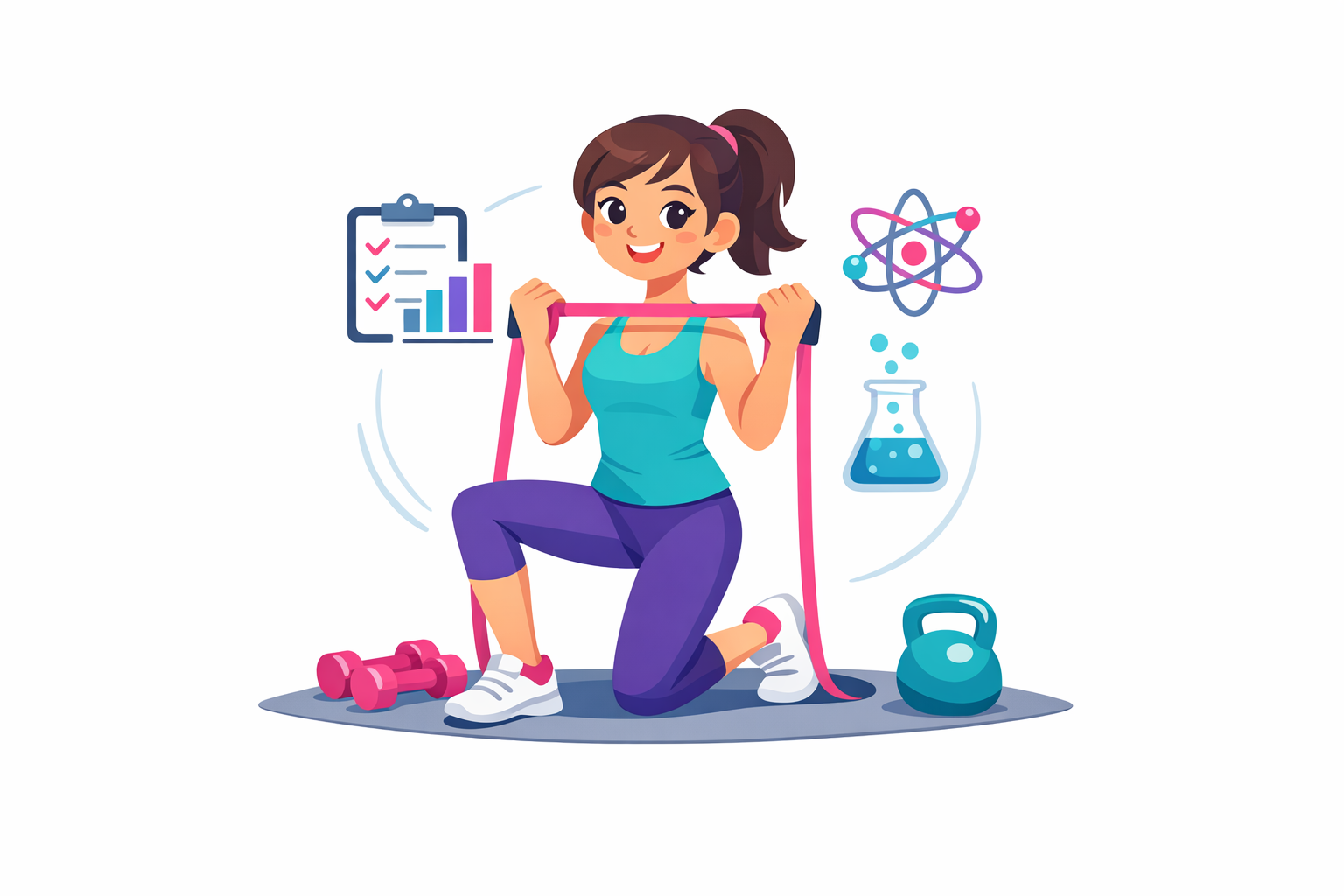

If your feed makes it look like everyone has a full squat rack in the living room, here’s a little reality check. Most of us have a couple of resistance bands tucked in a drawer, a crowded week, and about 25 minutes before the next thing on the calendar. So the real question is simple. Can bands actually deliver results?
We’re talking strength you can feel in daily life, visible muscle where you want it, and better endurance without trashing your joints. Not theory. Not gimmicks. Just tension you can control and repeat.
Quick Comparison
What’s in this Article
- The quick answer
- What counts as a resistance band and how the types differ
- Tools that make band training easier
- FAQ
- Decision recap: bands, weights, or both
- Next steps and quick checklist
This isn’t a magic shortcut. It’s a tool. Bands load your muscles by stretching against you, which you can scale up or down. Different tools give different benefits. Free weights are great. Machines are great. Bands are great when we use them with a plan.
Here’s what we’ll do together. We’ll cover the types of bands and what they’re best for. We’ll look at what the research actually says. Then we’ll map out how to program them so you see results that show up in the mirror and your life.
First, two honest caveats. Very heavy max-strength goals like a 300 pound deadlift will likely need more load than most bands can provide. And band setup matters. Anchors, grip, and range of motion affect how hard a move really is. Do this first: grab one lighter and one medium band, pick a push and a pull you can do safely, and note the heaviest band that lets you hit 8 to 12 solid reps with 1 to 2 reps left in the tank. That’s your starting point.
The quick answer
Yes, resistance bands are effective for building strength, adding muscle, and improving endurance when you train with enough tension, good form, and progressive overload. Studies show muscle activation and strength gains from band training can be similar to free weights when the effort is matched. The key is smart setup, the right band thickness, and a plan to make it a little harder over time.
What counts as a resistance band and how the types differ
Loop bands
These are big closed loops made of latex or rubber. Think pull-up assist bands or the thicker loops you can deadlift with. They shine for full-body work, anchored rows and presses, assisted pull-ups, and adding tension to squats or hip hinges. They can bite into the hands a bit, so a towel or grip can help.
Tube bands with handles
Round tubes with clip-on or fixed handles. These are friendly for presses, rows, curls, and flyes because the handles make gripping easier and keep your wrists happy. They’re great for home gyms and travel. Watch your anchor height and distance to keep tension on through the whole range.
Therapy or flat bands
Thin, flat strips without handles, often used in rehab and Pilates. They’re perfect for shoulder health, core moves, and learning patterns. Lower tension, super smooth resistance, and easy to tie to customize length. They won’t load heavy squats, but they’re gold for activation and higher-rep work.
Fabric hip bands
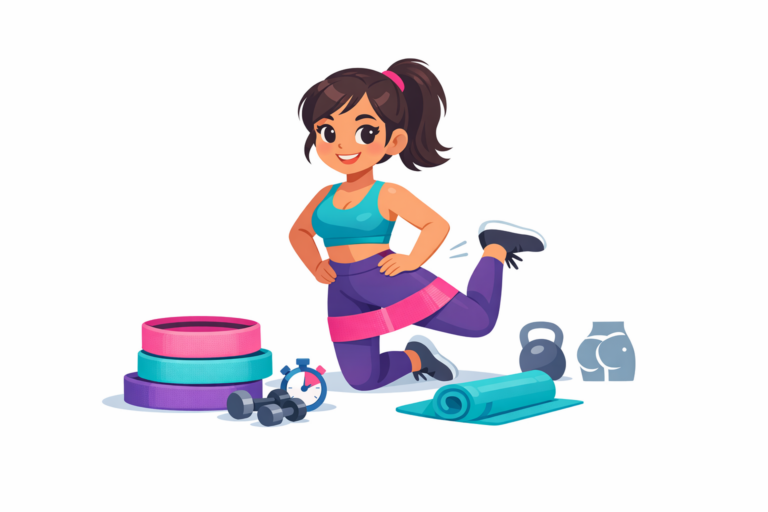
Short, wide loops that go above your knees or ankles. These are the glute girls. Use them for squats, hip thrusts, lateral walks, clamshells, and warm-ups. They resist rolling and feel comfy on skin. They won’t replace big lower-body loads, but they light up your side glutes and help clean up knee tracking.
How we judge effectiveness
Before we dive into programming, here’s how we’ll evaluate band workouts so you know what “effective” looks like:
- Load potential: can we create enough tension to challenge the target muscles in the rep range we want
- Range of motion: do we keep tension across the full movement, not just at the end
- Stability demand: are we controlling the path, bracing well, and not just bouncing the band
- Progression options: can we add small steps over time with thicker bands, more stretch, slower tempo, or extra sets
- Joint friendliness: does the setup feel smooth at the shoulders, knees, and lower back
- Practicality: quick to set up, safe anchor, and repeatable from session to session
If you hit most of those, your band session will move the needle. If not, small tweaks in anchor point, band thickness, or tempo usually fix it.
Tools that make band training easier
A do-it-all band for full‑body training

Level up at home: 5 color-coded bands go from light toning to assisted pull-ups. Durable latex, handles, and a door anchor power full-body workouts and recovery. All levels.
$29.99 on Amazon
Price and availability are accurate as of 09/12/2026 02:34 pm GMT and are subject to change.
If you want one piece of gear that covers presses, rows, squats, and core, WHATAFIT Resistance Bands Set with Handles, Door Anchor & Pull-Up Assist for Home Workouts is the simple, packable choice. It’s great for small spaces and travel, and makes it easy to progress by adjusting tension and tempo without needing a full rack of weights.
A lower‑body band for glutes and hips

Turn any room into a mini gym—5 color-coded bands (2–20 lb) with comfy handles, door anchor, and travel case. Durable, stackable, and great for full-body workouts on the go.
$29.99 on Amazon
Price and availability are accurate as of 09/12/2026 09:06 am GMT and are subject to change.
Glute and hip work gets way more focused with ProsourceFit 20 lb Tube Resistance Band with Handles and Door Anchor. Use it for warm‑ups, activation, and high‑rep finishers on lower‑body days to keep your knees tracking well and your glutes actually doing the work.
A lighter band for mobility and rehab days
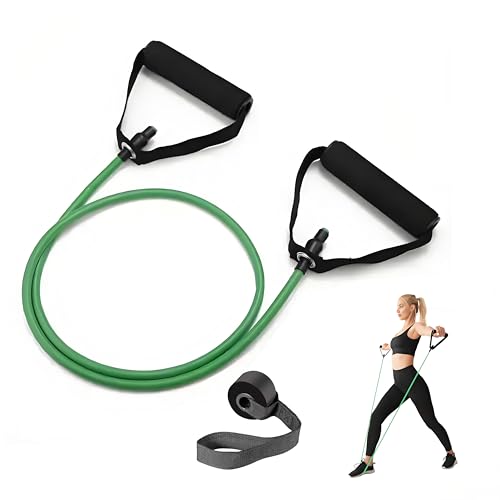
Turn any door into a mini gym. Durable bands with handles and a door anchor span strength, Pilates, and rehab—great for small spaces. Need help picking a level?
$8.99 on Amazon
Price and availability are accurate as of 09/12/2026 08:36 am GMT and are subject to change.
If you’re easing back from an ache or want extra shoulder and core stability work, this pick shines for gentle tension and longer sets. It’s a smart add‑on for mobility circuits and recovery days when we’re chasing blood flow, not max weight.
FAQ
Training basics
Q: Can bands really build strength and muscle like weights?
A: Yes, if we train hard and progress the challenge. Studies show similar strength and hypertrophy to free weights when effort and volume match. Take sets close to technical failure, use thicker bands or double up, and progress weekly with a bit more tension, reps, or sets.
Q: How often should we train with bands to see results?
A: Aim for 2 to 4 band sessions per week. For strength, use heavier bands for 3 to 6 reps, 3 to 5 sets, longer rests. For muscle, 6 to 15 reps, 3 to 5 sets, leaving 1 to 2 reps in the tank. Walk or do light core on off days if you want more movement without extra fatigue.
Troubleshooting & safety
Q: My bands feel too easy or too hard. How do I adjust fast?
A: Shorten the band (wrap around hand/foot or choke it on the anchor), step farther from the anchor, or switch to the next thickness. Slow the lowering for 3 seconds and add a pause at the stretch. If it’s too hard at the top, lower the anchor height or move closer to reduce peak tension.
Buying decisions
Q: Which band types do we actually need to start?
A: Keep it simple. Grab two long loop bands (light and medium) for presses, rows, squats, and deadlift patterns, plus one mini fabric loop for glutes. Add a door anchor or a tube set with handles if you love rows and chest presses with a handle feel.
If you want the short version, yes, resistance bands can build real strength, muscle, and endurance. The key is the same as with weights. Progressive overload, enough weekly volume, and decent form.
What changes in practice is how we progress. With bands, we adjust tension by shortening the band, stepping farther from the anchor, picking a thicker band, slowing tempo, or adding reps and sets. That makes them portable and joint friendly, but still challenging enough to grow.
Bands shine for beginners, travel, home workouts, and targeted glute or shoulder work. If your goal is very high max strength, heavy free weights will matter at some point. Different tools. Different benefits. Most of us do best with a blend.
Ready to make it real this week? Keep it simple. Two to four band sessions, focus on big movement patterns, add a tiny bit of challenge every 1 to 2 weeks. Small wins add up.
Decision recap: bands, weights, or both
Choose bands if
- You need joint friendly training or are coming back from a tweak and want controlled tension.
- You train at home, travel a lot, or have 20 to 30 minute windows.
- You want high quality glute, shoulder, and core work without heavy spinal load.
- You’re new to strength training and want to master movement with feedback.
Choose free weights or machines if
- Your main goal is max strength in heavy squats, deadlifts, or presses.
- You already lift consistently and need higher loads to keep progressing.
- You compete in strength sports that require barbell skill and heavy singles.
Blend both for the best of each
- Use bands for warm ups, activation, finishers, and travel days.
- Add bands to lifts for accommodating resistance or to match strength curves.
- Rotate band-only weeks during busy seasons, then return to heavier phases.
Next steps and quick checklist
Simple 5 step action plan
- Pick your split. Two full body days or an upper and lower split, 3 days a week.
- Choose 4 to 6 moves per session that cover push, pull, hinge, squat, and carry or core.
- Set your target. Strength focus at 4 to 6 reps with high tension. Muscle focus at 6 to 15 reps near 2 to 3 reps from failure. Endurance at 15 to 25 reps with shorter rests.
- Progress one thing each week. Slightly more reps, a thicker band, a shorter band length, or a slower tempo on the lowering phase.
- Track it. Write band color, anchor position, reps, and a quick difficulty note so you know what to beat next time.
Checkpoints to stay on track
- If the last 2 reps feel too easy, increase tension next session.
- If form breaks or joints feel cranky, dial back tension and slow your tempo.
- If you stall for 2 weeks, change a variable. Band thickness, range, exercise variation, or rest.
Edge cases and safety
- If you have a recent surgery, high blood pressure, or are pregnant or newly postpartum, clear your plan with a clinician or physical therapist.
- For osteoporosis or low bone density goals, include some heavier loading when safe. Bands are great, but bone responds best to load as you can tolerate it.
Pick one small thing you can try today. Maybe that’s a 15 minute band circuit after work. Maybe it’s ordering a set with two resistances so you can progress. Either way, you’re moving, you’re learning, and that counts.
Leave a Comment